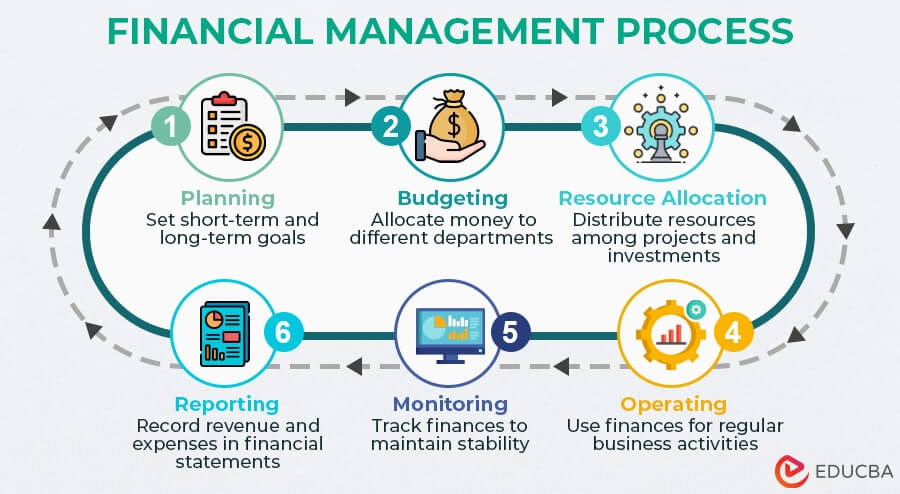
There is a recognisable category of professional who treats their work life with a discipline and rigour they completely fail to apply to their own finances. Detailed runbooks for production deployments sit alongside an inbox full of unread bank statements. Carefully documented onboarding processes coexist with a personal tax return that gets scrambled together every January under maximum time pressure. The instinct to standardise and automate at work does not, for many people, translate into the same instinct at home, even though the underlying need is similar. Personal finance is a recurring set of tasks with predictable cadence and consistent outputs, which is exactly the kind of work that benefits from being treated as a workflow.
The reason most people do not is partly emotional and partly cultural. Money carries baggage. It feels like something that should be intuitive, something where applying spreadsheet discipline would be slightly soulless or compulsive. The result is that the same brain that designs elegant processes for everyone else’s work treats its own financial life as a series of one-off scrambles. Once you let go of the assumption that personal finance should feel different from work, and start treating it as a system to be designed and maintained, the actual experience becomes calmer and more effective rather than colder.
What a personal finance workflow looks like
The starting point for treating personal finance as a workflow is identifying the recurring tasks and their natural cadence. Some happen weekly, such as reviewing transactions and checking that nothing unexpected has hit the current account. Others happen monthly, such as reconciling bills, moving money to savings and reviewing budget against actuals. A handful happen quarterly, including reviewing subscriptions, checking investment allocations and pulling a credit file. Annual tasks include the tax return for those who file one, reviewing insurance policies before renewal, updating financial associations and planning for the year ahead. Mapping this out, even informally, produces something that looks a lot like a runbook, with clear ownership, clear timing and clear definitions of done.
The benefit of doing this work explicitly is the same benefit you get from documenting any process. Tasks get done when they are scheduled rather than when they become urgent. The cognitive load of constantly half-remembering what needs doing disappears. Mistakes that arise from doing things in the wrong order, or skipping steps because nobody had codified them, stop happening. And the workflow itself becomes improvable, because once it exists you can find the steps that take longer than they should, the handoffs that produce errors, and the parts of the system that you have been getting wrong for years without realising it.
The standard operating procedures worth writing
Three small documents do most of the work in a personal finance system. The first is a monthly close runbook, which captures the steps you take at the end of each month to reconcile, categorise, save and review. Written down, it usually fits on a single page, and the act of writing it tends to reveal the steps you have been skipping. The second is an annual review document, which captures the larger questions you ask yourself once a year about progress, position and direction. The third is what you might call a runbook for life events, which describes the steps you take when something changes, including changing jobs, moving house, taking on a new financial commitment or recovering from an unexpected expense.
The life events runbook is the one most people underestimate. The financial admin attached to a house move or a job change is genuinely complicated, with steps that need to happen in particular sequences and within particular windows. Having even an outline of the right order saves both time and the kind of small mistakes that produce months of follow-up admin. Updating the electoral roll, redirecting post, notifying credit providers of address changes, transferring direct debits, updating beneficiary details on pensions and so on are all simple individually and easily forgotten in aggregate. A list, written once and updated occasionally, removes the chance of missing something.
Where credit and borrowing fit in the system
A well-designed personal finance workflow does not treat borrowing as an emergency intervention. It treats it as a tool that exists alongside saving, spending and investing, with a clear definition of when it is appropriate, what kind is appropriate and how it gets executed. The workflow approach replaces the implicit “borrow when desperate, otherwise avoid” rule with something more deliberate. Borrowing for predictable, planned, productive purposes such as consolidating higher-cost debt, funding a known project or smoothing a specific cash flow is part of the system. Borrowing reactively because the previous month went badly is a sign the system has broken down somewhere else and needs fixing rather than papering over.
UK lenders such as Evlo, which have built their proposition around fair, affordability-led borrowing for customers with realistic credit needs, fit comfortably into this kind of considered approach. The defining characteristic of borrowing within a workflow is that it is chosen rather than fallen into, with the costs, terms and consequences considered in advance and the repayment built into the monthly close routine rather than left as an afterthought. The same approach turns most financial decisions into smaller and less stressful ones. Saving becomes automatic because the workflow includes it. Spending stays within parameters because the workflow checks it. And the moments that used to be financial crises become routine items in a system that quietly absorbs them.