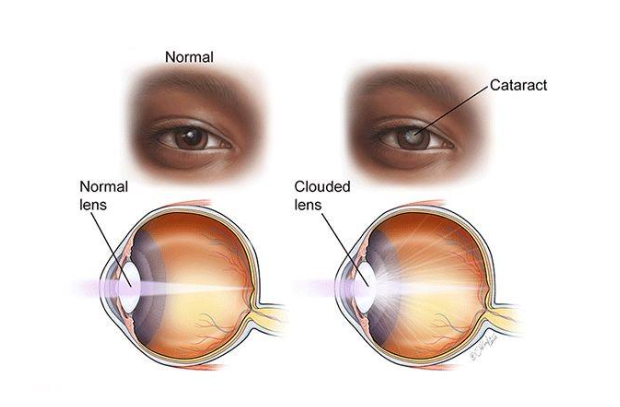
The human eye is an essential sensory organ that enables us to enjoy visual art, surroundings, colors, and movements. However, like other vital parts of the body, this highly specialized organ is also susceptible to various conditions that can hinder its functions. Cataracts are the most common condition where your eye’s natural lens becomes cloudy due to protein accumulation, causing a gradual decline in vision. Recent studies have shown that cataracts may start to develop between ages 40 and 50 leading to unpaired vision. The eye- condition greatly impacts the quality of the person making their daily tasks more difficult to perform. Therefore, this article will cover the Symptoms and Types of Cataract, helping you to discuss cataract symptoms with your opthalmologist and make an informed decision about your eye health and the treatment options available.
Types of Cataracts-
- Cortical Cataract- This type of cataract starts developing on the outer layer of the natural eye lens called the cortex, affecting the near vision. It progresses gradually, commonly affecting individuals over the age of 50.
- Intumescent Cataract- This eye condition develops when the one-clear lens becomes opaque, enlarged, and swollen leading to impaired vision due to fluid accumulation or degeneration of lens proteins.
- Nuclear Cataract- This type of cataract develops in the center of the lens nucleus. This condition usually appears in individuals in their late 50s, forming a cloudy and blurry vision.
- Posterior Subcapsular Cataract– This type of cataract develops clouding the back portion of the eye lens leading to opacification behind the eye lens.
- Congenital Cataract- A cataract forms due to a genetic defect based on age subset that develops before or within the first year of a baby’s life due to a faulty gene and can be easily cured.
- Traumatic Cataract– As the name suggests, this type of cataract occurs by sudden impact or blunt force into the eye due to serious accidents, sports falls, etc causing the risk of hazy or cloudy vision and sometimes vision- loss.
Since, cataracts develop slowly and without any pain, people do not realize they have cataracts in the initial stages. As a result, their early signs are often overlooked( missed). However, over time as the condition progresses, the symptoms become more noticeable, and evident leading to blurry and clouded vision. The clouding of the lens can lead to severe vision impairment if left untreated. Hence, the below segment will cover some common symptoms of cataracts.
Symptoms of Cataract-
- Having blurry vision- At the first stage, the mild haziness may be mistaken for dirty glasses or general eye- strain. However, the gradual onset can lead to consistent haziness which could be a sign of cataracts.
- Distorted vision such as ghost images- As cataracts progress, individuals may start experiencing double images in one eye. This visual disturbance makes the ghost images or double vision affecting the clarity of the object at which you are looking.
- Seeing faded colors for bright colors- If the eye condition progresses, it reduces the intensity and vibrancy of colors leading to impaired color perception. The gradual fading of colors can result in bright colors appearing dull, faded, and muted, making it challenging to tell various shades.
- Difficulty seeing in poor lighting conditions– This is another frequent symptom of cataracts in which individuals experience difficulty seeing in dim light(poor light conditions). The clouded lens reduces the ability to adjust to low-light situations and conditions.
- Seeing “ halos” around lights– The presence of halos or rings around lights, particularly at night is another noticeable symptom of cataracts. The increased sensitivity to light can create significant distractions from bright light sources making night driving challenging and uncomfortable.
- Fading of Colors– The fading of colors is called color desaturation affecting accurate color perception. Individuals with cataracts might experience a gradual loss of color vibrancy affecting daily life routines like selecting clothes, reading, or appreciating scenic beauty.
Now- days cataracts are a common and manageable eye- a condition leading to a reduction in visual acuity. Addressing the symptoms promptly and seeking appropriate medical advice can slow down the progression and improve daily functioning. Cataracts require attention and care regardless of their cause, whether resulting through aging, trauma, or other factors to ensure the vision is preserved.
As the saying goes, “The eyes are the windows to the soul.” Taking care of our vision is crucial for more than just seeing the world around us, but for meaningful engagement with others and living life to the fullest. For individuals facing cataracts, timely( prompt) treatment is essential to appreciate the beauty and details of our surroundings.
Sai Deep is the renowned clinic in Mumbai for cataract treatment, offering exceptional care along with cost-cutting eye surgery techniques to help you see again. Trust the leading eye specialist for reliable, effective cataract treatment and a brighter, clearer future.