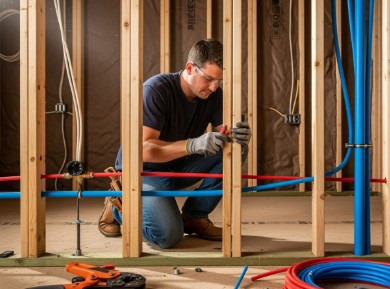
Most Houston homeowners who call a plumber about low water pressure or rusty water are hoping for a quick fix. A new fixture, maybe a sediment flush. What they often hear instead stops them cold: the pipes themselves need to go.
At that point, two questions take over. How much is this going to cost? And how am I supposed to pay for it?
This guide answers both, with the kind of specifics that actually help you plan, not just ballpark guesses buried in vague ranges.
Why Repipe Costs Vary So Much (And Why That Matters)
Search “repipe cost Houston TX” and you will find numbers anywhere from $4,000 to $16,000 or more. That spread is not random, and it is not contractors playing games with pricing. It reflects genuine differences in project scope.
Understanding what drives cost is the first step to getting a quote that makes sense.
1. Number of Fixtures, Not Square Footage
This surprises a lot of homeowners. Most repipe specialists price projects based on the number of plumbing fixtures, including sinks, toilets, showers, tubs, hose bibs, and supply lines, rather than the size of the home.
A 2,000-square-foot home with two bathrooms and a straightforward layout will cost considerably less than a 1,800-square-foot home that has been extended over the years, has three bathrooms, a laundry room, a wet bar, and an outdoor kitchen hookup.
Fixture-based pricing is actually more transparent and fairer for the homeowner. You know what you are paying for, and the number does not shift based on your zip code.
2. Material Grade
The pipe material you choose has a meaningful impact on price, and it shapes the long-term performance of the entire system. The two main options you will encounter in Houston are copper and PEX-A.
Copper has been the residential standard for decades. It is durable and time-tested, but it costs significantly more per foot, takes longer to install, and does not tolerate Houston’s hard water or the occasional freeze event especially well.
PEX-A, specifically the Uponor PEX-A product line, has become the dominant choice for repiping in Houston over the past several years. It is more flexible than rigid copper, resists corrosion and scale buildup, handles minor freeze events without bursting at the rates copper does, and installs faster, which reduces labor hours. The material itself costs less, but the performance is generally considered equal or better for residential water supply lines in this climate.
Most repipe specialists in the Houston area now default to PEX-A for these reasons, though copper remains available for homeowners who specifically request it.
3. Whether Drywall Repair and Paint Are Included
Here is where quotes from different contractors can diverge dramatically, even when the pipe material and fixture count are identical.
To replace water supply lines throughout a home, the crew needs access. That means cutting holes in drywall at intervals along pipe runs, typically in walls, ceilings, and sometimes under sinks or inside cabinets. The holes are small and purposeful, but they exist.
Some contractors hand you back a house with open holes and tell you to find a drywall crew. Others include the patch and texture work as part of the project scope. Some include drywall but not paint matching, so you end up with repaired walls in the wrong shade.
When you are comparing quotes, this single variable can account for thousands of dollars in additional work you did not budget for. Make sure every quote you evaluate specifies clearly what happens to your walls after the crew leaves.
4. Access Complexity
Single-story slab homes are generally the most straightforward. Two-story homes, homes built on pier-and-beam foundations with crawl space access, and homes with finished ceilings directly beneath pipe runs all add time and complexity. That complexity has a cost.
Older neighborhoods in areas like Bellaire, Pasadena, and Baytown often have homes with unusual layouts or previous DIY modifications that can affect how a repipe crew needs to route new lines.
What a Realistic Houston Repipe Budget Looks Like
Without a site visit, any number is a rough estimate. That said, here is a reasonable range based on typical Houston residential projects:
- Small home, 2 bathrooms, straightforward layout: $4,000 to $6,500
- Mid-size home, 2 to 3 bathrooms, typical suburban layout: $6,500 to $10,000
- Larger home, 3 or more bathrooms, added fixtures: $10,000 to $16,000+
These ranges assume PEX-A material. Copper adds roughly 20 to 30 percent to both material and labor costs on most projects.
They also assume a contractor who includes drywall repair and finish painting. If yours does not, add that work separately, and factor in the time and coordination required to schedule a second crew.
Fixed Per-Fixture Pricing: Why It Matters
One of the more consumer-friendly developments in the Houston repipe market is the shift toward fixed, per-fixture pricing models. Rather than quoting based on your neighborhood, home value, or the crew’s gut feel about what you will accept, a per-fixture model assigns a consistent price to each plumbing connection being replaced.
This approach does several things. It removes the geographic markup that affects homeowners in higher-income areas like Sugar Land, The Woodlands, or Katy for no rational reason. It makes quotes easier to compare across contractors. And it means your final bill should match your initial quote, not creep upward once work begins.
When requesting quotes, ask each contractor explicitly how they price the project. If the answer involves home size or location rather than a specific fixture count, push for more detail before signing anything.
Is Financing Available for a Whole-House Repipe in Houston?
Yes, and it has become more widely available in recent years. Plumbing projects at this scale, anywhere from $5,000 to $15,000, sit in the range where traditional credit cards are often a poor fit because of high interest rates, but a home equity loan feels like overkill.
Repipe-specific financing, offered directly through the contractor, fills that gap effectively.
Repipe Solutions Inc currently offers 24 months at 0% financing on whole-house repipe projects, which is one of the more favorable terms you will find for a residential plumbing project of this scope. On a $9,000 project, that works out to $375 per month with no interest accruing, provided the balance is paid within the term.
For homeowners who have been putting off a repipe because the upfront number felt out of reach, this kind of financing changes the calculus meaningfully. A project that felt like an emergency fund event becomes something that fits inside a monthly budget.
It is worth noting that the company is also currently offering 30% off whole-house repiping, which includes full drywall repair, paint, and a transferable lifetime warranty. That combination of discount, all-inclusive scope, and 0% financing is unusual in this market.
What the Transferable Lifetime Warranty Is Worth
Warranty terms matter more than most homeowners realize at the time of signing. A non-transferable warranty only protects you. The moment you sell the home, it disappears, offering nothing to the buyer and adding no value to the transaction.
A transferable lifetime warranty, by contrast, stays with the property. For homeowners planning to sell within the next several years, particularly those in active real estate markets like Katy, Kingwood, or League City, this can be a genuine selling point. Buyers and their agents increasingly notice when a home has been repiped, especially if it comes with documented warranty coverage.
It also signals something about how the contractor stands behind their work. A company willing to transfer a lifetime warranty on pipe material and labor is not cutting corners on materials or installation practices.
Questions to Ask Before You Commit
Before signing any repipe contract, get clear answers to these:
- Is drywall repair and paint included? If not, what exactly is excluded?
- What pipe material is being used? Get the brand and product name in writing, not just “PEX” generically.
- How is the project priced? Per fixture, per linear foot, or by estimate? Understand the method.
- What does the warranty cover, and is it transferable?
- What is the typical project timeline? A single-day or two-day turnaround is reasonable for most Houston homes. Longer timelines without explanation warrant a question.
- When is water restored each day? A professional crew should be restoring water to the home at the end of each working day, not leaving you without service overnight.
Key Takeaways
- Repipe cost in Houston TX is driven by fixture count, pipe material, access complexity, and whether drywall repair and paint are included in the scope, not just home size.
- PEX-A repiping generally costs less than copper while offering comparable or better performance for Houston’s climate conditions, including hard water and occasional freeze events.
- Fixed per-fixture pricing protects you from geographic markups and makes quotes easier to compare accurately.
- 0% financing over 24 months is available from some Houston repipe contractors, making a $5,000 to $15,000 project manageable without touching savings.
- A transferable lifetime warranty adds tangible value if you plan to sell the home, not just protection while you live there.
Frequently Asked Questions
How long does a whole-house repipe take in Houston? Most single-family homes in Houston can be repiped in one to two days by an experienced specialist crew. Water is typically restored at the end of each working day, with most homeowners experiencing a water shutoff window of around five to six hours. Larger or more complex homes may extend into a second or third day, but overnight disruption without water service is not standard practice with professional crews.
Does homeowners insurance cover the cost of repiping? Generally, no. Most standard homeowners policies cover sudden and accidental water damage caused by a pipe failure, but not the cost of replacing the pipe system itself. Some policies may cover limited portions of a repair in specific circumstances, so it is worth reviewing your policy or calling your insurer before assuming coverage exists.
Is PEX-A better than regular PEX for a Houston home? PEX-A refers to a specific manufacturing method, cross-linking during the extrusion process, that gives the pipe greater flexibility, better freeze resistance, and the ability to expand and return to shape without cracking. Uponor PEX-A is the most widely cited brand in this category. PEX-B and PEX-C are more rigid and less forgiving. For whole-house residential repiping in Houston, PEX-A is the higher-grade choice.
How do I get an accurate repipe quote in Houston? Most reputable Houston repipe contractors offer free on-site estimates. An in-person assessment of your fixture count, pipe routing, and access points is the only way to get a number you can rely on. Online cost estimator tools can give you a reasonable ballpark before the visit, which is helpful when preparing your budget range.
What happens to my walls after a repipe? Access holes are cut in drywall at intervals to allow the crew to route new pipe through the walls. What happens after depends on the contractor. Some leave the patching to you. Others include drywall repair as part of the project. A complete scope includes patch work, texture matching, and paint, so the wall looks finished rather than repaired. Always confirm this before the project starts.
Wrapping Up
A whole-house repipe is a significant home investment, but it is not the financial mystery it first appears to be. Once you understand what actually drives the cost, from fixture count and material grade to what happens to your walls when the crew is done, the quotes you receive start to make sense and become comparable.
If the upfront number still feels like a stretch, 0% financing options have made this kind of project genuinely accessible for Houston homeowners who need the work done but are not sitting on a pile of cash to fund it.
The best next step is getting a proper on-site estimate, ideally from a contractor who prices transparently, uses quality materials, and puts the full scope of work in writing before a single hole is cut.