TL;DR:
- Blackheads form when clogged pores oxidize and turn dark
- Gentle cleansing, exfoliation, and salicylic acid help clear and prevent them
- Skip harsh scrubbing and DIY extractions, they usually make things worse
- Consistency matters more than any single product
There was a time when you thought those little dark dots on your nose were just freckles. Then you leaned in close to the mirror one day and realized they weren’t going anywhere, no matter how many times you washed your face.
Sound familiar? Blackheads have a stubborn habit of clustering right on and around the nose, and once they show up, they tend to stick around. The good news is they’re also one of the easier skin concerns to manage once you know what’s actually causing them.
Here’s what helps, and why.
What Causes Blackheads in the First Place?
Blackheads develop when a pore becomes blocked with oil and dead skin cells but remains open at the top. Once this hits the air, it oxidizes and turns dark in color.
The nose is a typical problem spot because it contains more oil glands than most other areas of the face. More oil means more chance of clogged pores.
1. Wash Your Face Twice a Day
This one sounds basic, but it makes a real difference. Washing morning and night clears away the oil, sweat, and dirt that build up and settle into pores.
Just don’t overdo it. Washing too often, or scrubbing too hard, can strip your skin and cause it to produce even more oil to compensate. Twice a day is enough for most people.
2. Consider a Clay Mask
Clay has been used for skincare for centuries, and it still holds up. It absorbs excess oil and helps loosen the buildup sitting inside clogged pores.
Unlike pore strips, clay works more gradually, drawing out oil and impurities rather than pulling off a layer of skin. Some clay masks include sulfur, which can help too, though it’s worth patch testing first if you’ve never used it.
3. Be Careful With Pore Strips
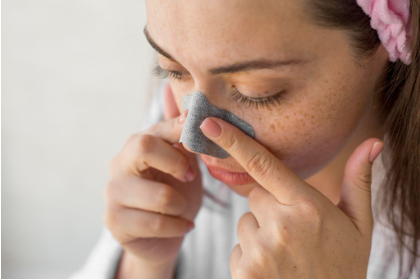
Pore strips might give you a great satisfying feeling when you peel them off, but they only offer a temporary fix. While they do help in getting rid of nasty surface debris from your skin’s surface, they don’t help in anything to regulate the oil production that caused it.
They can also remove natural oils from your skin, which sometimes leads to irritation or dryness. If you use them, steaming your face first can help soften pores and improve results.
4. Use Oil-Free Sunscreen
Exfoliating ingredients like salicylic acid can make your skin more sensitive to sun exposure. That makes an oil-free sunscreen essential, not optional, especially if blackheads are part of your routine.
Look for a formula labeled oil-free or non-comedogenic so you’re not adding extra shine or clogging pores further. For your face, about 1/4 teaspoon is enough. Reapply every 2 hours, or more often if you’re sweating or swimming.
5. Add a Retinoid if Your Skin Can Handle It
Topical retinoids help speed up skin cell turnover, which can prevent pores from clogging in the first place. They’re available over the counter or by prescription, depending on strength.
Retinoids can be strong, so most people do best starting slow, a few nights a week, before working up to daily use.
6. Try an Effective Exfoliant
Physical scrubs feel satisfying, but they can be too rough on skin that’s already dealing with congestion. A gentler and more effective option is chemical exfoliation with an ingredient like salicylic acid.
Salicylic acid is oil-soluble, which means it can get into the pore itself rather than just working on the surface. It helps break down the buildup of oil and dead skin that leads to blackheads in the first place.
This is where a leave-on treatment like the PanOxyl Clarifying Exfoliant can help. It’s formulated with 2% Salicylic Acid, the highest strength available without a prescription, to penetrate pores and dissolve the debris that causes blackheads and breakouts. The lightweight, alcohol-free formula absorbs quickly and includes Blue Algae to help calm any irritation along the way.
What to Avoid
Skip Benzoyl Peroxide
Although benzoyl peroxide is an excellent acne-fighting ingredient, it does not specifically target blackhead acne. Instead, it works against inflammation, which is great for cystic acne, pustular acne, and other inflamed breakouts.
Blackheads aren’t inflammatory, so benzoyl peroxide won’t do much to clear them. It won’t hurt your skin, but it’s not the right solution for this specific job. Salicylic acid is a better match since it targets the clogged pore directly.
Go Easy on New Products
Introducing too many active ingredients at once can overwhelm your skin and make blackheads worse, not better. Stick with one or two treatments and give your skin time to adjust before adding more.
The Takeaway
Blackheads on the nose are common, and they respond well to a simple, consistent routine. Gentle cleansing, regular exfoliation, and a salicylic acid treatment go a long way toward keeping pores clear.
Stay consistent, protect your skin with SPF, and resist the urge to pick. Clearer skin usually comes down to small habits repeated over time, not one big fix.