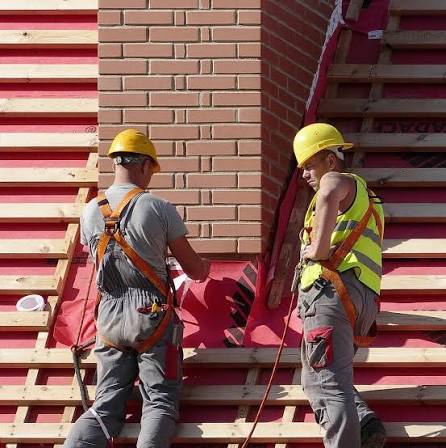
A newly released study from John Foy & Associates of 2024 federal labor data paints a detailed picture of who is dying at work in America, where, and why, revealing that the burden of workplace danger falls overwhelmingly on specific industries, states, and demographic groups.
Overall, 5,070 workers died on the job in the U.S. last year, a rate equivalent to one death every 104 minutes, while 2.5 million nonfatal injuries and illnesses were reported across private industry. The combined cost of these incidents reached $181.4 billion, factoring in lost wages, medical expenses, and an average cost of $1,540,000 per worker death.
A demographic divide in who dies at work
Among the study’s most notable findings is a persistent racial disparity in fatality rates. Hispanic or Latino workers recorded a fatal injury rate of 4.3 per 100,000 full-time equivalent workers, roughly 30% above the national average of 3.3, and the highest rate of any demographic group for the eighth year running. These workers accounted for 1,229 deaths in 2024, 24.2% of the national total, with more than two-thirds of those fatalities occurring among foreign-born workers concentrated in agricultural fieldwork, roofing, residential construction, and landscaping.
Black or African American workers recorded 624 fatalities at a rate of 3.4 per 100,000, slightly above the national average, while white workers recorded the highest raw count at 2,821 deaths, broadly proportional to their share of the labor force.
Gender disparities were equally stark. Men accounted for 91.9% of all workplace fatalities, reflecting heavy concentration in high-risk fields such as construction, transportation, and agriculture. Women, who made up just 8.1% of fatalities overall, represented 15.3% of all workplace homicide deaths, nearly double their overall share, pointing to a distinct pattern of violence-related risk tied to customer-facing roles in retail, healthcare, and food service.
Rural, resource-dependent states top the danger list
The study ranked all 50 states by fatal injury rate and found Wyoming in the top spot, at 13.9 deaths per 100,000 workers, more than four times the national average, driven by its concentration of agriculture, mining, and energy extraction. Mississippi (8.0 per 100,000), Alaska (7.1), North Dakota (6.8), and Arkansas (6.2) rounded out the top five, each shaped by similarly rural, resource-heavy economies with limited union representation and safety infrastructure.
“The 2024 data confirms what workers in America’s most dangerous industries already know: workplace safety is not improving,” said a spokesperson for John Foy & Associates, the firm behind the study. “And for millions of workers, the cost of going to work is measured not in dollars but in lives.”
Industry patterns reveal where risk concentrates
Natural resources and mining posted the highest fatal injury rate nationally at 19.2 per 100,000 workers, followed by construction (12.8 per 100,000, 1,034 deaths, the highest raw count of any sector) and transportation and warehousing (12.6 per 100,000, 865 deaths). Transportation incidents were the single leading cause of workplace death overall, responsible for 1,937 fatalities, 38.2% of the national total, ahead of falls, contact incidents, violent acts, and exposure to harmful substances.
On the nonfatal injury side, health care and social assistance workers recorded the highest number of cases of any industry, 553,800 incidents, 22.3% of the national total, linked to patient handling, workplace violence, and physically demanding shifts on a workforce that is disproportionately female.
The study’s authors say the consistency of these patterns across years, industries, and demographic groups points to structural gaps in regulatory oversight, workers’ compensation access, and employer accountability, rather than a series of unrelated incidents.