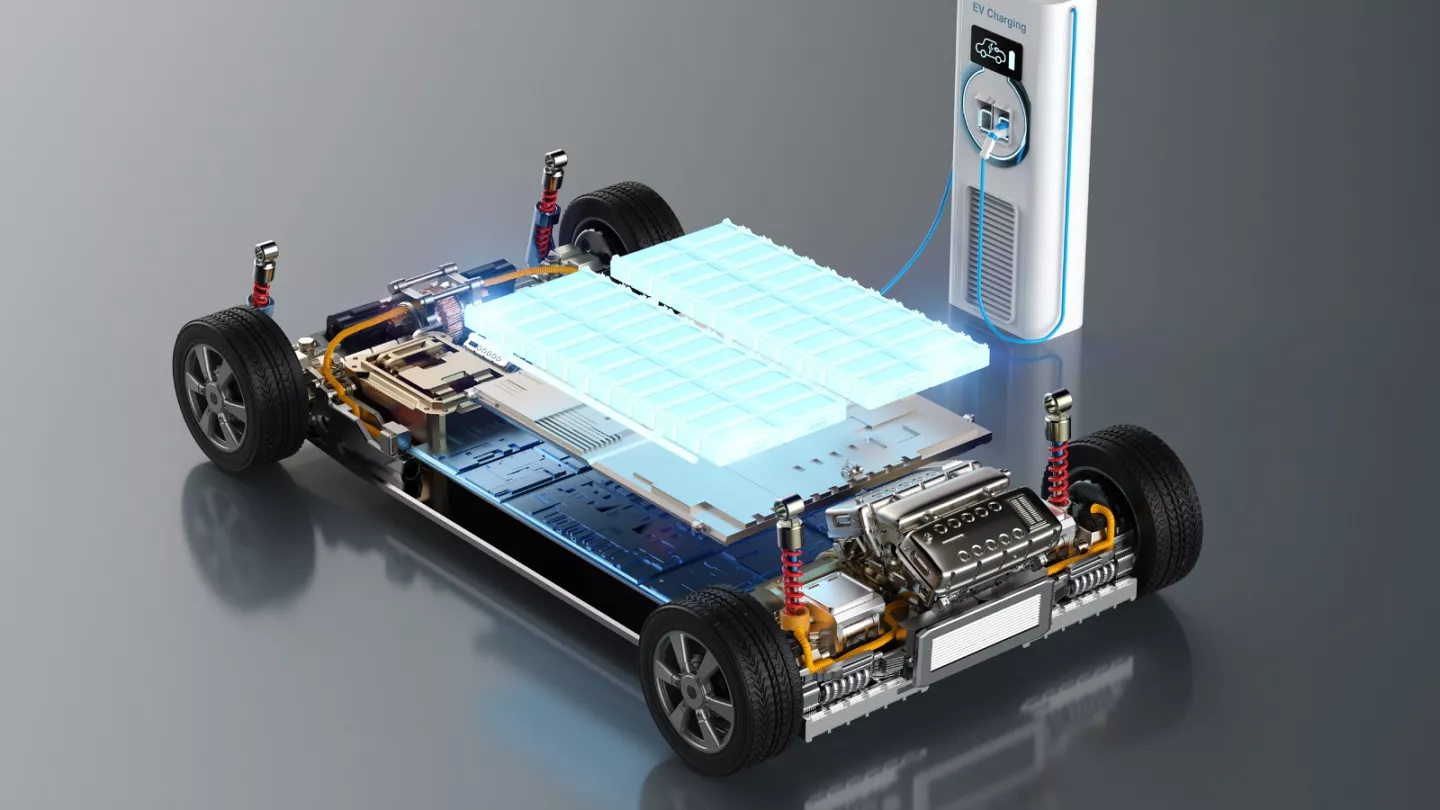
From charging speed to lifespan, here is what actually sets electric vehicle batteries apart from the batteries in your phone.
An electric vehicle (EV) draws energy from a large onboard battery pack that powers its electric motor(s) and other components. If you have ever wondered how EV batteries work and how they differ from the battery in your phone, read on to discover everything you need to know.
Same Batteries, Big Differences
The batteries found in modern portable electronic devices typically consist of a single cell to remain compact and lightweight. They typically operate at a mere 4 volts and, if subjected to frequent charge-and-discharge cycles, tend to last only a couple of years before beginning to degrade significantly.
EV batteries can consist of hundreds or, more commonly, thousands of interconnected cells, and they operate at voltages ranging from 400 to 800 volts. Another major distinction is that the federal government mandates that EV battery warranties cover at least 8 years or 100,000 miles.
Most of the new electric vehicles and used cars for sale in Jacksonville and other big cities exceed these requirements, with some manufacturers offering warranties extending up to 10 years or 170,000 miles. Automakers must also guarantee that the battery retains at least 70 percent of its original capacity throughout the warranty period, whereas many companies manufacturing portable electronics offer only a 12-month battery warranty, which typically covers only manufacturing defects rather than degradation, which is considered normal wear and tear.
Trade-offs in EV Battery Technology
The most common type of EV batteries found in vehicles sold in the U.S. contains a blend of nickel, manganese, and cobalt (NMC), although another type of lithium-ion battery, known as lithium iron phosphate (LFP) has recently gained popularity.
Several other EV battery technologies are currently on the horizon. By replacing highly flammable liquid electrolytes with solid materials, these batteries offer higher energy density in a smaller, lighter package; they charge much faster (potentially reaching 80 percent in under 10 minutes) and provide greater driving range.
Last year, Mercedes-Benz began testing a prototype of its EQS electric sedan equipped with a semi-solid-state battery, developed jointly with its Formula 1 powertrain subsidiary. It will be a new era of the Mercedes-Benz lineup, as described in the Autoland Jax car dealer’s overview.
Meanwhile, the Volkswagen Group recently installed a solid-state battery in a Ducati V21L MotoE motorcycle to serve as a “technical demonstrator.”
Other potential battery chemistries currently in the testing phase include lithium-sulfur and sodium-ion batteries, while researchers are also working on improving electrode materials to boost the performance of existing battery technologies.
EV Battery Charging Options
You have two primary options for charging most portable electronic devices: fast charging using a 120-volt AC cable and wall outlet, or slower charging using USB cables and ports. Electric vehicles, however, offer three charging options:
- Level 1 is the slowest method; it utilizes a standard 120-volt household outlet and adds only a few miles of range per hour.
- Level 2 charging is faster and typically occurs while the vehicle is parked at home, at work, or at a hotel, using either a 240-volt outlet, such as those used for large household appliances like electric clothes dryers, or, more commonly, a wall-mounted home charging unit. Level 2 charging is also available at public charging stations operating at 208 volts.
- Level 3 is DC fast charging, available only at public charging stations; charging speed depends on factors such as the charger’s power output, measured in kilowatts (kW), and the number of electric vehicles charging simultaneously.
While DC fast charging offers the quickest recharge times for EV batteries, it is also subject to variables that typically do not pose an issue for Level 1 and Level 2 charging.
Although all charging levels are influenced by battery temperature and State of Charge (SOC), Level 3 charging is more heavily dependent on the battery’s maximum acceptance rate, the station’s total power output (since many public charging stations utilize load management to distribute available power among connected vehicles), and other factors.
In short, actual Level 3 charging times can fluctuate, sometimes significantly, depending on the specific circumstances. Furthermore, while larger battery packs generally accept higher power inputs (measured in kW) for longer durations than smaller ones, their sheer size may also mean they take longer to fully charge. However, a larger battery in an 800-volt vehicle may charge faster than a smaller battery in a 400-volt vehicle, provided all other conditions are equal.
Battery Lifespan
Electric vehicle batteries are designed to last significantly longer, than those on other devices, and most owners do not use them on a constant, daily basis in the same way they use smartphones. Consequently, EVs may undergo far fewer charge-discharge cycles. An EV battery also experiences greater stress and heat buildup when fully charged, which accelerates degradation.
This is why many automakers recommend limiting EV battery charging to 80 percent; this measure protects the battery and maximizes its longevity, while also discouraging frequent Level 3 fast charging, which can degrade the battery’s condition much more rapidly.
Furthermore, charging an EV battery from 80 to 100 percent can take longer than charging it from 20 to 80 percent, as the charging rate slows down to prevent battery damage and generally takes more time as the battery becomes increasingly saturated with electrons.
A Costly Component
The battery pack currently accounts for approximately 30–40 percent of an electric vehicle’s total cost, making it the most expensive component of the vehicle. It is also the most complex part of an EV, incorporating a sophisticated Battery Management System (BMS) to monitor cell voltages, temperatures, and current flow.
It also requires advanced cooling and heating systems to ensure optimal performance across a range of temperatures and to help prevent thermal overheating and potential fires. In all likelihood, if this expensive EV component fails and requires replacement, it will be covered by the vehicle’s warranty.
Here are the basics of how EV batteries function to help you make a more informed purchasing decision, and look forward to years of fuel-free, worry-free electric driving.