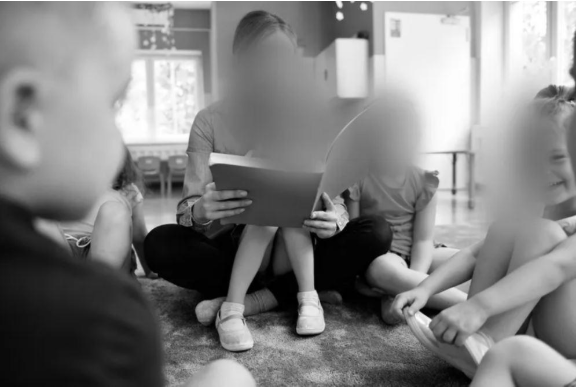
In daycare settings, video requests are rarely abstract. A parent wants to understand how a fall happened. A provider needs to respond to a complaint. A director is asked to preserve footage after a pickup dispute, a bite incident, or a concern about supervision. In each case, the request may be focused on one child, one classroom moment, or one hallway event. The footage itself, however, usually shows much more.
That is what makes daycare video handling so sensitive. Cameras in childcare environments do not capture isolated events in a vacuum. They capture groups of children, teachers, aides, parents, and daily routines. Sharing a clip to answer one family’s question can easily expose several other children at the same time.
A safer approach is not to avoid every request and not to hand over raw footage whenever emotions are high. It is to define the purpose of the disclosure, reduce the clip to what is actually needed, and remove identifiers that are not necessary for the reason the footage is being shared.
Why daycare footage requires extra care?
In many workplaces or public settings, video privacy questions revolve around adults. In daycare, the people on camera are often minors. That changes the sensitivity of the material immediately. Even where a parent has a strong interest in understanding what happened to their own child, that interest does not automatically extend to the faces, behavior, or identities of every other child in the same room.
Daycare footage may also reveal more than the incident itself. It can show drop-off patterns, pickup routines, caregiver assignments, classroom layouts, and interactions that other families never expected to be shared outside the center. A short clip from a classroom or corridor can expose information about unrelated children simply because they happened to be in the same frame.
Requests for video are usually operational, not theoretical
Most daycare video disclosures arise from practical situations:
- a parent asks to review footage after an injury,
- a provider needs to respond to an allegation or complaint,
- management is preparing material for counsel or an insurer,
- a dispute over pickup, discipline, or supervision needs to be documented,
- a regulator or outside authority asks for a defined segment.
In all of these cases, the same discipline applies: the fact that footage exists does not mean the full recording should be shared in its raw form.
The safest disclosure starts with narrowing the clip
Before anyone talks about redaction, the first question should be: what is the smallest segment that actually answers the request? If the issue concerns a two-minute sequence in a classroom or entry area, then a twenty-minute export with multiple unrelated transitions, arrivals, and background interactions is usually excessive.
Trimming the footage first does three things at once. It reduces the number of unrelated children and adults visible in the material. It makes review faster and more realistic for staff. And it lowers the chance that the clip will reveal something sensitive that has nothing to do with the incident at issue.
In childcare settings, scope reduction is not just a technical step. It is often the strongest privacy control available.
Faces are the primary disclosure risk
In daycare video, faces are typically the most immediate and sensitive identifier. A parent may legitimately want to confirm that their child was present in a sequence or that a specific event happened. That does not mean they need to see the unblurred faces of other children who were nearby.
This is where face blurring becomes an operationally useful safeguard. If the purpose of the disclosure is to confirm sequence, conduct, timing, or staff response, blurring unrelated children can preserve the event while reducing unnecessary exposure. The same applies to adults in frame who are not central to the issue, including other parents, visitors, or staff members who are not part of the matter being reviewed.
Daycare footage also contains secondary identifiers
Even when faces are handled correctly, childcare footage may still expose more than intended. Name labels on cubbies, sign-in sheets, classroom rosters, artwork with first names, pickup tags, teacher badges, and parent sign-out stations can all become identifiers once the clip leaves the center.
That is why a “share the file and move on” approach is risky. In daycare, context matters just as much as the main subject of the clip. A redacted video should be reviewed as a parent, regulator, attorney, or insurer would see it – not merely as the center sees it internally.
Why local, file-based review makes sense in childcare settings
Daycare operators are often under time pressure when requests arrive. Families want fast answers. Staff want matters resolved. Management may need to coordinate with insurers, legal counsel, or outside investigators. Under pressure, the temptation is to forward raw footage because it is the fastest path.
That shortcut is often where the real risk begins. Once an unredacted clip is sent outside the center or management group, control over copies, forwarding, and reuse becomes harder to maintain.
That is one reason local, file-based workflows make sense in childcare environments. Gallio PRO supports that type of process by working with stored images and pre-recorded video files in a controlled setting, so a disclosure-ready clip can be prepared before the material leaves the organization. For a closer look at how this process works in practice, see this guide to video anonymization.
A practical overview of the workflow is available here: https://gallio.pro/anonymize-video/
Its automatic scope is deliberately focused: Gallio PRO blurs faces and vehicle license plates in stored files. It does not blur full body silhouettes, and it does not provide real-time anonymization or video stream anonymization. That narrower design can actually be useful in daycare workflows, because it focuses the automatic layer on the identifiers that most often create disclosure risk while leaving room for a human reviewer to address contextual details.
Other elements – such as name badges, documents, labels, logos, screen content, or other visual details – are not detected automatically, but they can be masked manually using the built-in editor. In a childcare setting, that matters because classroom and reception areas often contain written information that should not travel with a parent-facing or externally shared clip.
Gallio PRO also does not collect logs containing face or license plate detection data and does not store logs containing personal or sensitive information. For centers and operators trying to avoid unnecessary metadata sprawl around sensitive footage, that can make the review workflow easier to manage.
Parent access should not become broad access
Some of the hardest daycare disputes happen when a parent believes that seeing the full video is the only fair outcome. But a center’s responsibility usually extends beyond the requesting family. A single clip may show several other children whose parents never agreed to broad sharing. It may also reveal staffing patterns, classroom practices, or secure areas in ways that go beyond the original concern.
A structured response is more defensible than an improvised one. That structure usually separates:
- the original stored recording,
- the working copy used for trimming and review,
- the disclosure-ready clip that is actually shared.
That distinction matters because it helps prevent the common mistake of sending the raw file merely because the request feels urgent.
Speed matters, but so does consistency
Childcare operators do not have endless time for video review. Any workable process has to support real operations. That means the best workflow is usually not the one with the most features. It is the one staff can repeat reliably: trim the clip, blur unrelated faces, check for written identifiers, export a controlled version, and keep the original under tighter internal control.
Consistency also matters for trust. If one parent receives a wide, lightly reviewed export and another receives a tightly narrowed clip, the center may look arbitrary even if both decisions were made in good faith. A standard approach to video sharing helps avoid that problem.
Sharing less is often the most professional response
In daycare environments, the goal should not be to disclose the maximum amount of footage possible. It should be to answer the legitimate question with the minimum necessary exposure. That protects other children, reduces operational risk, and gives providers a more defensible position if the matter later expands into an insurance, licensing, or legal issue.
The strongest childcare video workflows are not built around fear of sharing. They are built around controlled sharing: narrow purpose, limited clip, blurred non-parties, and careful review before anything leaves the center.
FAQ – Daycare Video Requests
In many cases, a narrowed and redacted clip is safer because classroom footage usually contains other children who are unrelated to the request.
Can Gallio PRO automatically detect labels, documents, or screens in daycare footage?
No. Automatic detection is limited to faces and license plates. Other visual identifiers can be masked manually using the built-in editor.
Does Gallio PRO support live-stream anonymization for daycare cameras?
No. It works with stored photos and pre-recorded video files rather than real-time or live-stream footage.
Why is face blurring useful in daycare disclosures?
Because it allows a center to share the relevant sequence while reducing exposure of other children who happen to appear in the same clip.