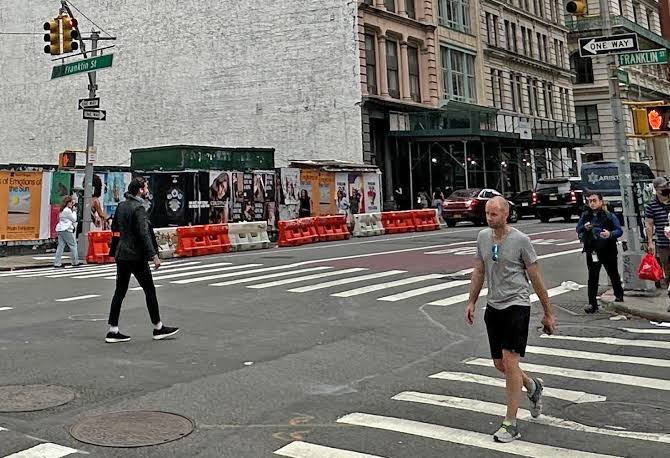
Jaywalking is often treated as a minor infraction, but new data compiled by Anidjar and Levine shows that the consequences are far more severe than most Americans realize. In 2024, the United States recorded 1,484 jaywalking related pedestrian deaths out of 7,080 total pedestrian fatalities . The firm’s analysis of federal crash records, state level reporting, and national safety datasets reveals a pattern that is not random. Instead, the most dangerous pedestrian environments share common traits: missing sidewalks, high speed corridors, poor lighting, and long crossing distances.
This rewrite examines the geography of risk, the structural conditions that shape pedestrian danger, and the ways infrastructure decisions influence fatality patterns across the country.
Where Fatal Jaywalking Accidents Happen
The data shows that most fatal jaywalking incidents occur in places where safe pedestrian infrastructure is missing. According to the Governors Highway Safety Association, roughly 65 percent of pedestrian deaths in 2023 occurred in areas without sidewalks. This aligns with the broader national conversation about walkability and the uneven distribution of safe streets across American cities.
Concentration of Risk
The study highlights that pedestrian fatalities are not evenly distributed across road networks. In Los Angeles, for example, only 6 percent of streets account for 70 percent of all pedestrian deaths and severe injuries. This clustering effect suggests that a small number of high risk corridors drive a disproportionate share of fatalities.
Why These Areas Are So Dangerous
The most hazardous locations share several characteristics:
- High speed limits
- Long crossing distances
- Lack of sidewalks
- Poor nighttime lighting
- Arterial road design that prioritizes vehicle flow over pedestrian safety
These conditions create environments where pedestrians are forced to make unsafe decisions, often because no safe alternative exists.
Time of Day and Seasonal Patterns
The study’s analysis of Fatality Analysis Reporting System data shows that nearly three out of four pedestrian deaths occur at night. Only 26 percent occur during the daytime, and less than 1 percent are classified as unknown.
Most Dangerous Hours
The single most dangerous hour for pedestrians is between 8 pm and 9 pm. During this hour, 369 weekday fatalities and 329 weekend fatalities were recorded.
Seasonal Trends
Late fall and early winter consistently show the highest fatality counts. December, November, and January lead the nation in pedestrian deaths, while summer months show the lowest numbers .
Factors contributing to winter risk include:
- Shorter daylight hours
- Reduced visibility
- Increased alcohol consumption during holiday periods
Alcohol’s Role in Pedestrian Fatalities
Alcohol is a major factor in fatal pedestrian crashes. According to the National Highway Traffic Safety Administration, 46 percent of fatal pedestrian crashes in 2023 involved alcohol on the part of either the driver or the pedestrian . GHSA data shows that 29 percent of pedestrians killed had blood alcohol levels above 0.08 percent.
This suggests that behavioral factors intersect with infrastructure failures, creating a layered risk environment.
Who Is Most at Risk
Working age men account for about 70 percent of all pedestrians killed, with a fatality rate of 3.11 per 100,000. Women have a fatality rate of 1.26 per 100,000 . Children under 10 are the least likely to be involved in fatal pedestrian crashes.
State Level Differences
The study identifies significant geographic variation in pedestrian fatality rates.
States With the Highest Fatality Rates
| State | Fatality Rate per 100,000 Residents |
|---|---|
| New Mexico | 4.29 |
| Mississippi | 3.59 |
| Louisiana | 3.46 |
| Nevada | 3.38 |
| Arizona | 3.33 |
States With the Highest Total Deaths
| State | Total Pedestrian Deaths |
|---|---|
| California | 1,090 |
| Texas | 763 |
| Florida | 668 |
| Arizona | 250 |
| Georgia | 286 |
Even though the national fatality rate declined slightly from 2.22 to 2.10, high risk conditions remain widespread across roughly half the country .
Florida as a Case Study
Florida recorded 668 pedestrian fatalities in 2024 and more than 10,000 pedestrian related crashes. Sixty one of those deaths were classified as jaywalking related, with Palm Beach and Broward counties reporting some of the highest totals .
Despite strict jaywalking laws requiring pedestrians to yield to vehicles when crossing outside crosswalks, the state remains one of the most dangerous for pedestrians .
The Role of Drivers
Driver behavior contributes significantly to fatal pedestrian crashes. Speeding, distracted driving, and impaired driving are major factors, and about 24 percent of pedestrian fatalities involve hit and run drivers .
Some states are shifting enforcement toward driver accountability. Virginia emphasizes driver violation codes, while California conducts targeted operations at intersections and crosswalks .
Conclusion
The data compiled by Anidjar and Levine shows that jaywalking fatalities are not simply the result of individual decisions. They reflect structural conditions, infrastructure gaps, and policy choices that shape pedestrian risk. The geography of danger is clear. The question is whether states and cities will respond with the infrastructure and enforcement changes needed to reverse these trends.