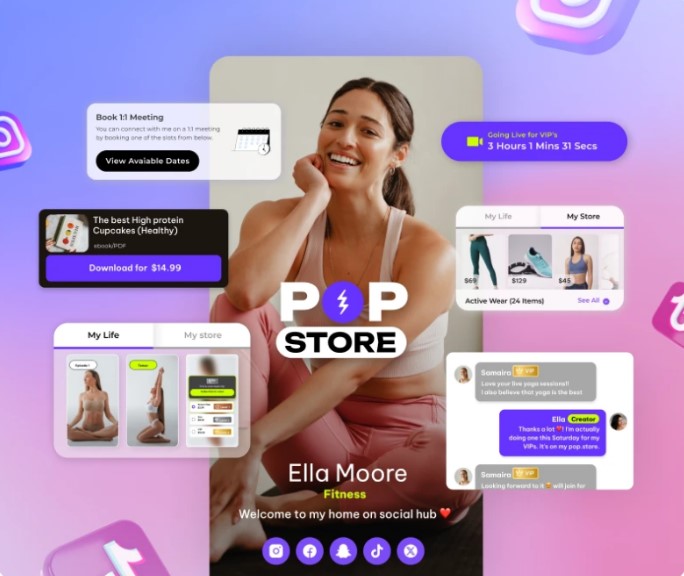
In today’s creator-driven digital economy, monetizing content is no longer limited to brand deals or ad revenue. Creators are transforming into entrepreneurs—selling digital goods, memberships, merch, and experiences directly to fans. As this shift unfolds, platforms that cater specifically to creator needs have emerged as essential tools for success. This is exactly where Pop.store comes in. If you’re wondering what is Pop.store and why it’s taking over your feed in 2025, you’re not alone. It’s more than just another link-in-bio tool—it’s redefining creator commerce from the ground up.
But this transformation didn’t happen overnight. It’s the result of years of frustration with limited monetization platforms, poor user experiences, and tools that weren’t built for creators in mind. Pop.store is filling a critical gap—offering simplicity, ownership, and power back to the people who generate value online.
Let’s take a deep dive into what’s happening behind the scenes of this creator commerce revolution and why Pop.store is poised to lead it.
The Creator Economy Has Changed—And Fast
The creator economy is no longer a niche term. It’s a full-blown industry projected to surpass $500 billion by 2027. From YouTubers and TikTok stars to newsletter writers and Twitch streamers, creators are now legitimate businesses with real revenue streams, operational needs, and loyal communities.
But with this evolution comes new demands:
- More monetization control
- Streamlined digital storefronts
- No middlemen or gatekeepers
- Better user experiences for fans
Old platforms like Linktree, Ko-fi, and Gumroad offered partial solutions—but in fragmented ways. None of them truly empowered creators to own their full digital storefront in a way that felt seamless and beautiful.
That’s where Pop.store enters the picture—not just as another link tool, but as a fully integrated solution for creator-led commerce.
Why the Bio-Link Tool Era Is Ending
For years, bio-link tools like Linktree and Beacons were the go-to solution for creators wanting to add multiple links on social profiles. And while functional, they weren’t built for real commerce. Their biggest limitations included:
- No customizable product displays
- Lack of integrated checkout or storefront logic
- Inconsistent branding opportunities
- Limited analytics and fan interaction tools
These tools essentially became glorified menus, sending fans to external links and platforms where creators had less control. That’s why so many creators have started leaving legacy tools like Linkpop behind.
In fact, if you’re still wondering what happened to the popular Shopify-supported Linkpop, this breakdown on Linkpop explains exactly why so many are switching to Pop.store in 2025—and never looking back.
What Makes Pop.store So Different?
Unlike traditional tools that simply aggregate links, Pop.store allows creators to build fully functional digital storefronts—within minutes. The platform has exploded in popularity for several reasons:
1. One-Page Stores Optimized for Conversion
Pop.store offers creators a sleek one-page storefront that blends content, product offers, and branding—all in one place. No redirects. No friction. Just scroll, click, and buy.
2. Custom Domains and Branding
Forget clunky URLs like “linktree.com/yourname.” Pop.store offers personalized domains (like “yourname.pop.store”) and full visual customization, making it feel like a real owned site.
3. Integrated Checkout
Users can purchase digital goods, book services, or subscribe to memberships directly on the Pop.store page. No extra logins or third-party redirects needed.
4. Digital-First Product Types
Creators can sell eBooks, video tutorials, wallpapers, templates, coaching calls, early access content—you name it. Pop.store is built with these use cases in mind.
5. Analytics That Matter
Instead of generic impressions and clicks, Pop.store provides insights into what’s actually converting—what fans are buying, when, and why.
Pop.store in Action: Use Cases for Modern Creators
Let’s look at a few types of creators who are thriving on Pop.store:
Visual Artists
From digital art prints to Procreate brushes and tutorials, artists are using Pop.store to sell directly from Instagram or Twitter without relying on third-party galleries.
Musicians and Podcasters
EP pre-orders, fan memberships, live show bookings—all handled through a simple storefront that feels native to the artist’s brand.
Content Creators & Influencers
Influencers are monetizing their followers with travel itineraries, fitness guides, fashion lookbooks, and brand collabs—all via one Pop.store page.
Coaches & Educators
Yoga instructors, business coaches, and educators use Pop.store to sell session packages, digital courses, or host gated live sessions.
From Platform Dependency to Creator Ownership
One of the most valuable things Pop.store offers is ownership.
Creators have been at the mercy of platform algorithms and monetization rules for too long. Whether it’s YouTube demonetization, Instagram reach limitations, or TikTok bans—your income shouldn’t be platform-dependent.
Pop.store allows creators to:
- Build direct relationships with fans
- Own and manage digital sales
- Reduce reliance on third-party platforms
- Monetize anytime, anywhere—even outside social media
This is especially crucial for niche creators or those just starting out. A polished, direct-to-fan storefront can level the playing field instantly.
How to Get Started with Pop.store
Getting started is surprisingly easy and doesn’t require tech skills. Here’s a simplified step-by-step:
- Sign up for free at Pop.store
- Choose your subdomain (or connect a custom domain)
- Add your profile image and branding elements
- Upload your digital products or services
- Set pricing, payment options, and delivery formats
- Share your Pop.store link on your social media bios, YouTube description, or email signature
Your store is live. Your brand is visible. And your fans can support you with just a tap.
The Verdict: Pop.store Is Creator Commerce Evolved
We’ve seen creator tools come and go. We’ve seen platforms promise empowerment and deliver compromise. But Pop.store has hit the sweet spot: blending flexibility, control, and design into a solution tailor-made for creators in 2025.
It’s not just about selling products—it’s about building a business. A brand. A future.
And if you’re still wondering what is Pop.store, it’s time to find out—because this platform may just be the missing piece in your creator journey.