Have you ever thought about how your diet might help with the ups and downs of your monthly cycle? The truth is, what you eat can have a real impact on symptoms like cramps, mood swings, and tiredness.
Understanding the nutritional needs at different times in your cycle can help you feel your best. This approach is called cycle syncing, and more and more people are finding that following their body’s natural rhythm is a great way to improve their well-being. If you want a more personalized plan, a menstrual coach can help you find what works best for you.
Making thoughtful food choices can lead to clear improvements in your mood, energy, and comfort. Instead of letting symptoms take control, you can use what you eat to support your body.
Let’s look at how changing your meals throughout the month can make a difference.
Why Diet Matters for the Menstrual Cycle
How Does Nutrition Affect Your Menstrual Cycle?
Eating the right foods can help with period symptoms. Many people accept cramps, mood swings, and low energy as normal, but these can often be eased with some simple nutrition changes. Your body changes a lot over the month, and your nutrition should, too.
By paying attention to those shifts, you can give your body what it needs so you feel better overall.
When you eat with your cycle in mind, you can help stop problems before they get worse. For example, eating enough iron during your period can help prevent you from feeling tired, and foods that fight inflammation can make cramps less severe. This way of eating supports your body at every step.
How Do Your Hormones Change What You Need to Eat?
Your hormones go up and down throughout your cycle and that changes how hungry you feel, how much energy you have, and how your mood shifts. Estrogen rises after your period and peaks at ovulation, while progesterone increases after you ovulate.
These changes affect everything from your cravings to your energy. Stress hormones like cortisol are higher after ovulation, too. By knowing when these shifts happen, you can adjust your meals to help boost your energy, keep you comfortable, and support your body’s needs.
Why Try Cycle Syncing With Your Diet?
Changing what you eat with your cycle isn’t just about dealing with symptoms. It helps you tune in to your own body. Many people find it supports regular cycles, improves mood, and even helps with things like PCOS.
If you pay attention to your appetite, how tired you feel, and your cravings throughout the month, you can eat in a way that keeps you feeling healthier all month long, not just during your period.
The Four Phases of the Menstrual Cycle
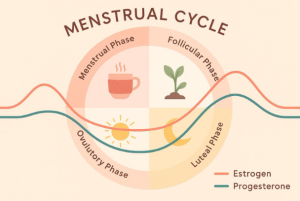
To match your meals to your body’s needs, you need to know the four phases of your cycle. Not every cycle is exactly 28 days-anywhere from about 23 to 35 days can be normal. Keeping track of your own cycle is the best way to spot patterns. Each phase comes with different hormone levels and different needs.
Menstrual Phase (Days 1-5)
This phase starts on the first day of your period and lasts about 3-7 days. During your period, both estrogen and progesterone are low. You might feel tired and need more comfort and rest. Your body loses blood and needs extra support.
You need to replace lost nutrients-especially iron-and choose foods that are gentle and easy to digest. Try to stay away from processed foods, too much sugar, spicy foods, or alcohol during this time, since these can make cramps and inflammation worse. Stick to warm, nourishing foods.
Follicular Phase (Days 6-14)
The follicular phase overlaps a bit with your period and ends at ovulation. Estrogen rises as your body gets ready to release an egg. This can mean you have more energy, a better mood, and might feel more social. You might also notice bloating or changes in digestion, so supporting your gut is still helpful during this phase.
Ovulatory Phase (Days 15-17)
This short phase covers the days around ovulation, when you are at your most fertile. Estrogen peaks now, usually making you feel energetic, confident, and at your best.
However, some women might feel mild cramps or a little bloated. Ovulation can also trigger some inflammation, so foods that help with that are helpful now.
Luteal Phase (Days 18-28)
After ovulation, your body starts making more progesterone. If you don’t become pregnant, both estrogen and progesterone drop as you get close to your next period. During this phase, premenstrual symptoms like mood changes, bloating, and cravings are common. Your body uses more energy, too, so you might feel hungrier and need more carbs for energy.
Foods for the Menstrual Phase
While you’re on your period, focus on foods that are soothing, warm, and rich in the nutrients you need to recover from blood loss. This is the time for comfort foods that boost your energy and help your body rebound.
Main Nutrients Needed During Menstruation
Iron is especially important, as you lose iron when you bleed. B vitamins are good for keeping energy and mood up, and magnesium helps with cramps. Foods that lower inflammation (and drinking enough water) can help you feel less bloated and uncomfortable.
Choose foods that are easy to digest, since bloating and slower digestion can be an issue during your period. Warm, cooked meals are easier to handle than cold or raw ones.
Best Foods for Your Period
| Need | Food Examples |
| Iron | Beef, lamb, liver, lentils, chickpeas, spinach, kale, oysters, clams |
| Vitamin C (helps use plant iron) | Oranges, strawberries, bell peppers, broccoli |
| Omega-3s (lower inflammation) | Salmon, mackerel, walnuts, flaxseeds |
| Magnesium | Pumpkin seeds, dark chocolate, leafy greens |
| Hydration/Electrolytes | Water, coconut water, bananas, peppermint & ginger tea |
Foods for the Follicular Phase
As your period ends and estrogen rises, you should choose foods that help build up your energy and support hormone growth. This phase is about eating for repair, renewal, and activity.
What to Focus On During the Follicular Phase
Choose foods that keep your energy up and help your body process estrogen. Lean proteins, complex carbs, and fiber keep you fueled. Eating a variety of fresh foods and supporting your gut also help your body process hormones properly.
Best Foods for the Follicular Phase
| Need | Food Examples |
| Protein | Chicken, turkey, fish, eggs, lentils, mung beans |
| Complex Carbs | Quinoa, barley, oats, sweet potatoes |
| Estrogen Balance/Fiber | Broccoli, kale, cabbage, cauliflower |
| Fresh Fruits | Berries, grapes, oranges, pomegranate |
| Gut Health | Kombucha, kimchi, sauerkraut, kefir |
Foods for the Ovulatory Phase
This is your highest energy window, but your body is doing a lot of hard work. Eating foods that help your liver process hormones and that reduce inflammation can help you feel your best.
Key Nutrition for Ovulation
Eat foods high in fiber to help your body handle increased estrogen. Zinc and B vitamins help with hormone balance and mood. Light meals with lots of greens and fresh foods are best now.
Best Foods for the Ovulatory Phase
| Need | Food Examples |
| Zinc | Salmon, tuna, lamb, sunflower seeds |
| B Vitamins | Eggs, whole grains, lean proteins |
| Fiber | Spinach, tomatoes, kale, Brussels sprouts, lentils |
| Light Whole Grains | Quinoa, corn |
| Antioxidants | Berries, leafy greens, dandelion greens |
Foods for the Luteal Phase
This phase is when most PMS symptoms show up. Your body needs more calories and carbs, and eating right can help with cravings, mood, and discomfort.
How to Eat During the Luteal Phase
Fill up on complex carbs to keep your blood sugar steady. Magnesium may help with cramps, and B vitamins support mood. Healthy fats and proteins also keep you full and help you feel stable.
Best Foods for the Luteal Phase
| Need | Food Examples |
| Magnesium | Pumpkin seeds, chia seeds, almonds, cashews, dark chocolate, spinach |
| Complex Carbs | Brown rice, sweet potatoes, squash, beans |
| Healthy Fats | Tuna, turkey, red meat, sunflower seeds, chickpeas, navy beans |
| Potassium | Nuts, beans, leafy greens, sweet potatoes |
Tips for Syncing Your Diet to Your Cycle
Starting to match your meals to your cycle is all about paying attention to your body. There’s no need for strict rules-just notice what works for you and try to plan ahead. Here’s how you can make the process easier:
How To Track Your Cycle for Planning Meals
Use a period tracking app or mark your cycle on a calendar. Notice when you feel tired, crave certain foods, or have mood changes. After a couple of months, you’ll see patterns that help you prepare better meals and snacks for each phase of your cycle. This way, you can shop and cook in advance for days you know you won’t have much energy.
Sample Meals for Each Phase
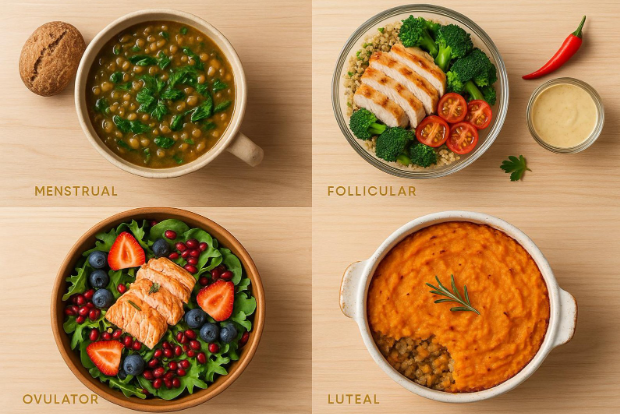
- Menstrual: Warm foods like lentil and spinach soup, beef stew, oatmeal with berries and pumpkin seeds, ginger tea.
- Follicular: Grilled chicken and quinoa bowls with broccoli and zucchini, or stir-fried lean pork with peppers and kimchi.
- Ovulatory: Big salads with grilled salmon, berries, and greens, or quinoa with roasted Brussels sprouts and sesame seeds.
- Luteal: Hearty meals like sweet potato shepherd’s pie, chickpea curry, or brown rice with roasted roots and turkey. Snack on dark chocolate and nuts.
These meal ideas are flexible. The main thing is to listen to your body and adjust based on what feels good to you.
Common Questions About Food and Your Cycle
What Foods Can Help with Common Period Symptoms?
The right food choices can make a big difference with cramps, bloating, tiredness, and mood swings. Instead of eating sugary snacks or processed foods, try these options:
- For Cramping: Magnesium-rich foods like dark chocolate, avocados, bananas, greens, nuts, and seeds. Omega-3s from salmon or flaxseeds and ginger tea help too.
- For Tiredness: Iron-rich foods such as beef, lentils, and spinach, paired with vitamin C. B vitamins in eggs and whole grains help you feel more awake.
- For Bloating: Drink plenty of water, eat whole grains, fruits and veggies for fiber, and try bananas or sweet potatoes for potassium.
- For Mood and Cravings: Choose complex carbs like oats or sweet potatoes. Healthy fats like avocados and nuts, and B vitamins from greens and salmon, also help mood. Dark chocolate or fruit are better options if you crave sweets.
The best way to handle symptoms is to build your meals on whole, unprocessed foods that suit each phase. If you have very severe or unusual symptoms, check in with a healthcare provider to rule out any bigger issues.