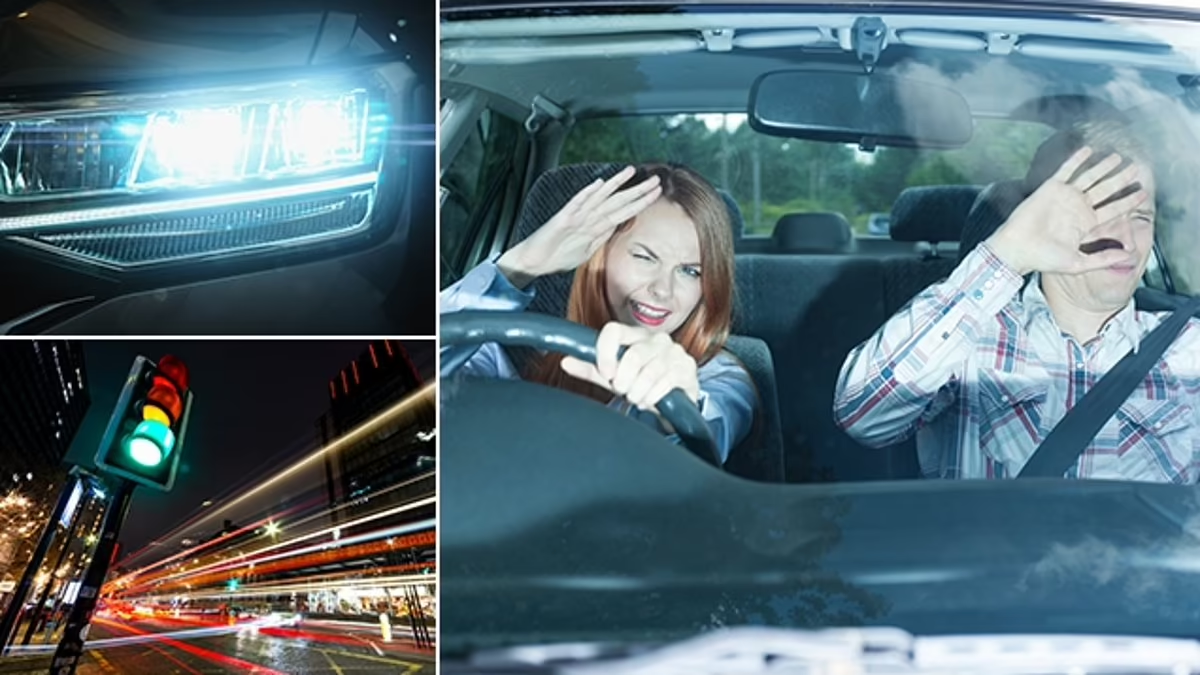
For many drivers, the story begins the same way. A dark two lane road, a curve ahead, and then a sudden burst of white light that wipes out the view of the pavement. The moment lasts only a few seconds, but it is long enough to drift toward the shoulder or miss a hazard in the road. A new analysis from Chaikin Trial Group shows that these moments, while brief, can have serious consequences for certain drivers and in certain parts of the country.
The study examines federal crash records from 2019 through 2023 and finds that 46,154 people were killed in nighttime crashes on unlit roads during that period. Of those deaths, 446 were linked to glare that impaired a driver’s vision. That is roughly one percent of all nighttime fatalities in non lighted conditions. The number is small, but the experience behind it is familiar to millions of drivers who have felt the sudden wash of brightness from modern headlights.
The data shows that glare related crashes are not evenly distributed. They cluster in states with older drivers, older vehicles, and roadways that offer little room for error. The study also shows that while LED headlights have improved overall nighttime safety, they have not eliminated the discomfort or the risk that glare poses for certain drivers.
Where Drivers Feel the Impact Most
The study compares glare related fatalities across states and adjusts the numbers for population size. This reveals which states experience glare related deaths at higher than expected rates.
Top States for Glare Related Fatalities Adjusted for Population
| State | Fatalities | 2023 Population | Fatalities per 100,000 |
|---|---|---|---|
| Alabama | 19 | 5,117,673 | 0.37 |
| Kentucky | 17 | 4,512,310 | 0.38 |
| Virginia | 19 | 8,715,698 | 0.22 |
| Indiana | 16 | 6,833,037 | 0.23 |
| North Carolina | 18 | 10,835,491 | 0.17 |
| Georgia | 20 | 11,064,432 | 0.18 |
| California | 50 | 39,198,693 | 0.13 |
| Illinois | 16 | 12,549,689 | 0.13 |
| Florida | 30 | 22,904,868 | 0.13 |
| Texas | 30 | 30,727,890 | 0.10 |
Drivers in Alabama and Kentucky face the highest rates of glare related fatalities relative to population. These states do not have the largest number of vehicles on the road, yet they show disproportionate risk. The study suggests that demographics and roadway environments play a major role.
One of the clearest demographic patterns involves older drivers. Age related changes in vision make it harder to recover from sudden brightness, and this shows up in the crash data.
Top States for Glare Related Fatalities Among Drivers 65 and Older
| State | Fatalities | 65+ Population | Fatalities per 100,000 |
|---|---|---|---|
| Alabama | 5 | 932,119 | 0.54 |
| Arizona | 5 | 1,437,731 | 0.35 |
| Virginia | 5 | 1,498,931 | 0.33 |
| North Carolina | 6 | 1,915,356 | 0.31 |
| Florida | 13 | 4,917,782 | 0.26 |
| Indiana | 3 | 1,181,568 | 0.25 |
| Texas | 10 | 4,194,990 | 0.24 |
| Illinois | 5 | 2,205,830 | 0.23 |
| Georgia | 3 | 1,699,250 | 0.18 |
| California | 9 | 6,311,919 | 0.14 |
Alabama again sits at the top. Florida, with one of the nation’s largest older driver populations, also ranks high. These numbers reflect what many older drivers already know from experience. Glare is not just uncomfortable. It can be disorienting, especially on narrow, unlit roads.
What Drivers Experience in the Moment of Glare
The study incorporates findings from an Insurance Institute for Highway Safety analysis of 220 nighttime crashes between 2017 and 2024. The data shows that most glare related crashes begin with a simple scenario: an oncoming vehicle.
Sources of Glare in Studied Crashes
- Oncoming headlights: 88 percent
- Headlights from trailing vehicles: 8 percent
- Headlights from lateral or parked vehicles: 4 percent
Once glare hits, the driver’s next few seconds matter. The IIHS study identified the most common actions that led to crashes.
Driver Actions in Glare Related Crashes
| Driver Action | Percent of Cases |
|---|---|
| Lane departure to the right | 45 percent |
| Impeding object obscured | 23 percent |
| Misjudging a turn | 15 percent |
| Lane departure to the left | 12 percent |
| Other | 4 percent |
These actions reflect what drivers describe in their own words. A momentary loss of visibility. A drift toward the shoulder. A missed curve. A pedestrian or object that blends into the darkness.
Why Modern Headlights Feel Brighter
Many drivers believe that headlights have become too bright. The study acknowledges this perception but also shows that modern LED headlights have improved overall safety.
Crash Reductions Linked to Headlight Quality
- Good rated headlights: 19 percent fewer nighttime single vehicle crashes
- Good rated headlights: 23 percent fewer nighttime pedestrian crashes
- Acceptable headlights: 15 percent reduction
- Marginal headlights: 10 percent reduction
LED headlights illuminate more of the roadway and last longer than halogen lights. They also tend to earn higher safety ratings. The data shows that improvements in headlight design have not increased glare related crashes. Instead, they have reduced overall nighttime crash risk.
How Headlight Quality Has Changed
When the IIHS began rating headlights in 2016, only one of more than 80 tested systems earned a good rating. Since then, automakers have made significant improvements.
Changes in Headlight Ratings Over Time
- By 2025, 51 percent of tested headlights earned a good rating
- Only 16 percent were rated marginal or poor, compared to 82 percent in 2016
- Excessive glare was found in 21 percent of headlights tested in 2017
- By 2025, only 3 percent produced excessive glare
Manufacturers have also reduced the number of headlight systems offered per model by 17 percent between 2019 and 2021. More vehicles now come standard with a single good rated headlight system.
Where Glare Related Crashes Happen Most Often
The study identifies several conditions that frequently appear in glare related crashes.
Common Crash Conditions
- A single vehicle
- Wet or rainy roads
- Local undivided two lane roads
- Lower speed limits
- Drivers over age 65
- Older vehicles
These conditions create a visibility environment where even moderate glare can become hazardous. The issue is not brightness alone. It is brightness combined with weather, road design, and driver vulnerability.
How Drivers Describe the Experience
A study from the Royal Automobile Club in the United Kingdom offers insight into how drivers perceive headlight brightness. Although the study is international, the findings mirror concerns expressed by American drivers.
Driver Perception Data
- 89 percent believe some headlights are too bright
- 74 percent believe headlight dazzle is common
- 67 percent have slowed down to recover from glare
- 64 percent have worried about a crash due to glare
- 16 percent avoid driving at night because of glare
- 65 percent say it takes one to five seconds to recover after being dazzled
In the United States, more than 78,000 people signed a petition in early 2026 calling for restrictions on overly bright headlights.
Why Older Vehicles Make Glare Worse
The study highlights a problem that many drivers do not realize affects glare.
Vehicle Condition Factors
- Cloudy or oxidized headlight lenses can reduce illumination by up to 80 percent
- These same lenses can increase glare by up to 60 percent
This means that older vehicles may produce more glare and provide less visibility at the same time.
A Human Problem, Not Just a Technical One
Chaikin Trial Group’s study shows that glare related crashes are relatively rare, accounting for no more than two out of every thousand nighttime crashes. But the risks are not evenly shared. Older drivers, older vehicles, wet roads, and undivided local roads all increase the likelihood of a glare related crash.
The data shows that modern headlights have improved safety overall. The issue is not that headlights have become too bright. It is that the conditions in which drivers encounter them vary widely. For some drivers, glare is a momentary discomfort. For others, it is a genuine safety threat shaped by age, environment, and the limitations of older vehicles.
The study suggests that continued attention to headlight standards, driver education, and vehicle maintenance will be essential as lighting technology continues to evolve. But it also makes clear that the experience of glare is not just about the light itself. It is about the driver behind the wheel and the road ahead.