Natural disasters caused $133 billion in total economic losses across the United States in 2025, but insurers covered only $93 billion of that figure, according to a major new study from Barcus Arenas analyzing federal disaster cost data and commercial insurance market trends. The resulting $40 billion coverage gap landed directly on property owners, businesses, and communities whose policies did not go far enough, and it did so in a year when no hurricanes made landfall on U.S. soil, a factor that kept overall loss totals well below their worst-case ceiling.
The research, which draws from Climate Central’s U.S. Billion-Dollar Weather and Climate Disasters database and the Deloitte Center for Financial Services, paints a detailed and urgent picture of a country in which disaster costs are accelerating, insurance coverage is becoming simultaneously more expensive and less comprehensive, and the financial buffer available to property owners after a catastrophic storm has never been thinner.
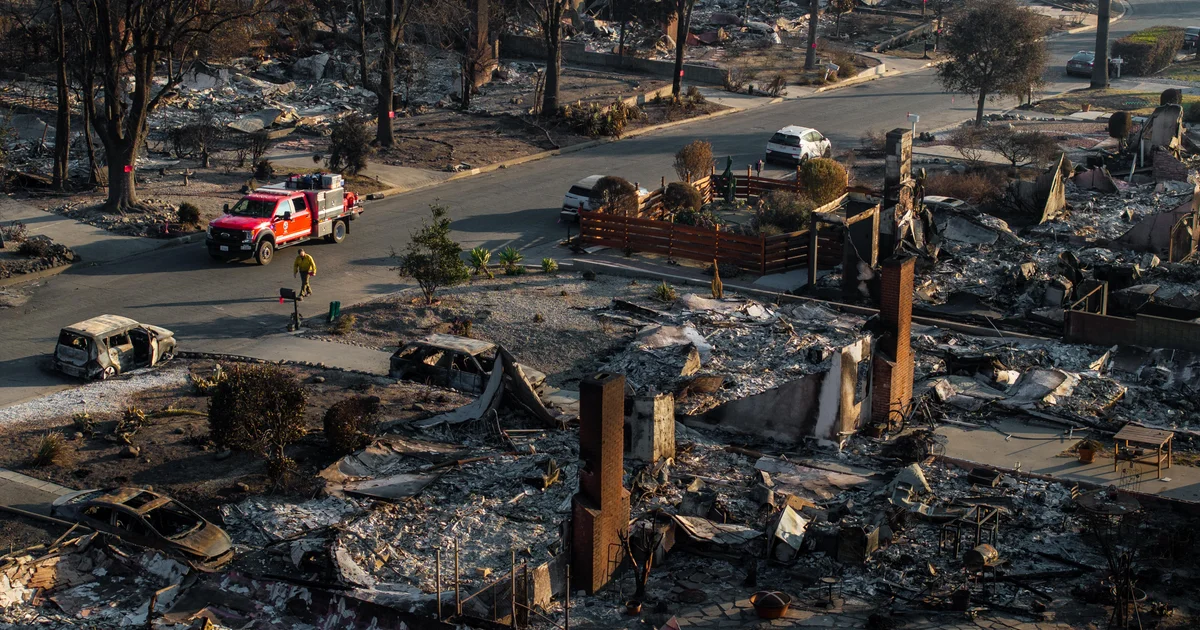
California’s 2025 disaster burden was extraordinary by any measure. The state absorbed an estimated $75 billion in disaster-related losses, representing 53.5% of the nation’s total $116.1 billion in confirmed billion-dollar disaster costs for the year. That figure is almost entirely attributable to a single event: the Los Angeles wildfires of January 7 through 28, which burned through the Pacific Palisades, Altadena, and surrounding communities over three weeks. The fires destroyed more than 16,000 homes and businesses, forced over 200,000 evacuations, and produced what Climate Central confirmed as the costliest wildfire event in U.S. recorded history. The event functioned as a direct stress test of California’s property insurance infrastructure, one that exposed systemic fragility in coverage availability across the state’s highest-risk markets at the worst possible time.
Texas ranked second in total disaster costs with an estimated $7.5 billion in losses, a 7.73% share of the national total. Unlike California’s single-event catastrophe profile, Texas’s cost burden was distributed across the 21 separate billion-dollar disasters it absorbed during the year, the highest frequency of any state in the country. Missouri, Illinois, Indiana, Oklahoma, and Alabama each absorbed approximately $3.5 billion in costs tied primarily to the spring tornado season, while Mississippi, Ohio, and Tennessee each recorded approximately $1.5 billion in disaster-related losses.
The study situates those cost figures within a deeply concerning long-term trend in commercial insurance markets. According to the Deloitte Center for Financial Services, average commercial real estate insurance costs have nearly doubled over the past decade, rising from $1,558 per building per month in 2013 to $2,726 by the end of 2023. In the ten states carrying the heaviest storm burden, the trajectory has been even steeper, with five-year cumulative cost increases reaching 108% and individual years recording year-over-year increases of up to 31%. Deloitte projects that monthly per-building insurance costs in those highest-risk markets will climb from $3,077 in 2026 to $6,062 by 2030, a compound annual growth rate of 10.2% sustained over four years.
What the data reveals is that rising premiums have not produced broader or more reliable coverage. Insurers have responded to escalating storm losses by narrowing policy terms, raising wind and hail deductibles, and withdrawing from commercial property coverage lines in some of the country’s most exposed markets. Severe convective storms, the category that drove the majority of 2025’s damage outside California, do not announce themselves weeks in advance the way hurricanes do. They arrive suddenly, cause concentrated damage, and generate claims that the study notes insurers are increasingly motivated to dispute, delay, and underpay. The burden of proof falls on the property owner, and the distance between a policy’s promised coverage and what is actually delivered following a disaster has grown measurably wider in recent years.
The study’s composite Storm Stress Index, which weighs both disaster frequency and disaster cost share to produce a single risk ranking, places Texas and California in an Extreme tier, separated by just 2.4 index points despite representing near-opposite risk profiles. Eight additional states share a High tier ranking: Missouri, Oklahoma, Georgia, Tennessee, Alabama, Illinois, Indiana, and Pennsylvania, whose presence in the rankings signals that high-stakes storm risk has expanded well beyond the traditional geographic boundaries most insurers and property owners have historically used to define their exposure.
Taken together, the findings make a clear case that the financial infrastructure designed to absorb disaster losses in the United States is falling further behind the pace of disaster activity with each passing year.