High humidity is bad news. Mold growth, musty odors, warped wood, and nasty air quality are what you get. Dehumidifiers solve these problems—but only if you place them correctly.
When you have more than one floor, where you place the dehumidifier is more important than you might realize.
We’ll show you exactly what areas to target on every floor and explain why.
Understanding Where and Why
Dehumidifiers work by drawing humid air in, extracting the moisture, and blowing dry air back out. The process is fairly straightforward. However, there’s one catch.
A dehumidifier can only dry out the air immediately around it. It cannot reach moisture trapped three rooms away or draw air across closed doors.
If you live in a studio apartment, anywhere is a great place because the unit reaches everywhere. When you have a house with multiple floors, things get a little trickier. Air flows differently on each level. Temperature zones exist.
Different rooms have unique humidity challenges. What works great on one floor might do little for another.
Remember this: always place your dehumidifier as close to the source of humidity as possible. Treating the source means you automatically keep the rest of the house drier as well.
Start With Basement and Ground Floor Levels
The basement is by far the most common humidity culprit in a multi-story house. Outside air cools and sinks, causing moisture in the ground to rise up through concrete walls and floors. Without proper ventilation, that humidity hangs around in your basement.
The first rule of placing a dehumidifier is to put it in the basement first. Place it towards the center of the room so air can freely flow in from every direction. Don’t place it directly against a wall. Most models require between six and twelve inches of clearance on all sides to function properly.
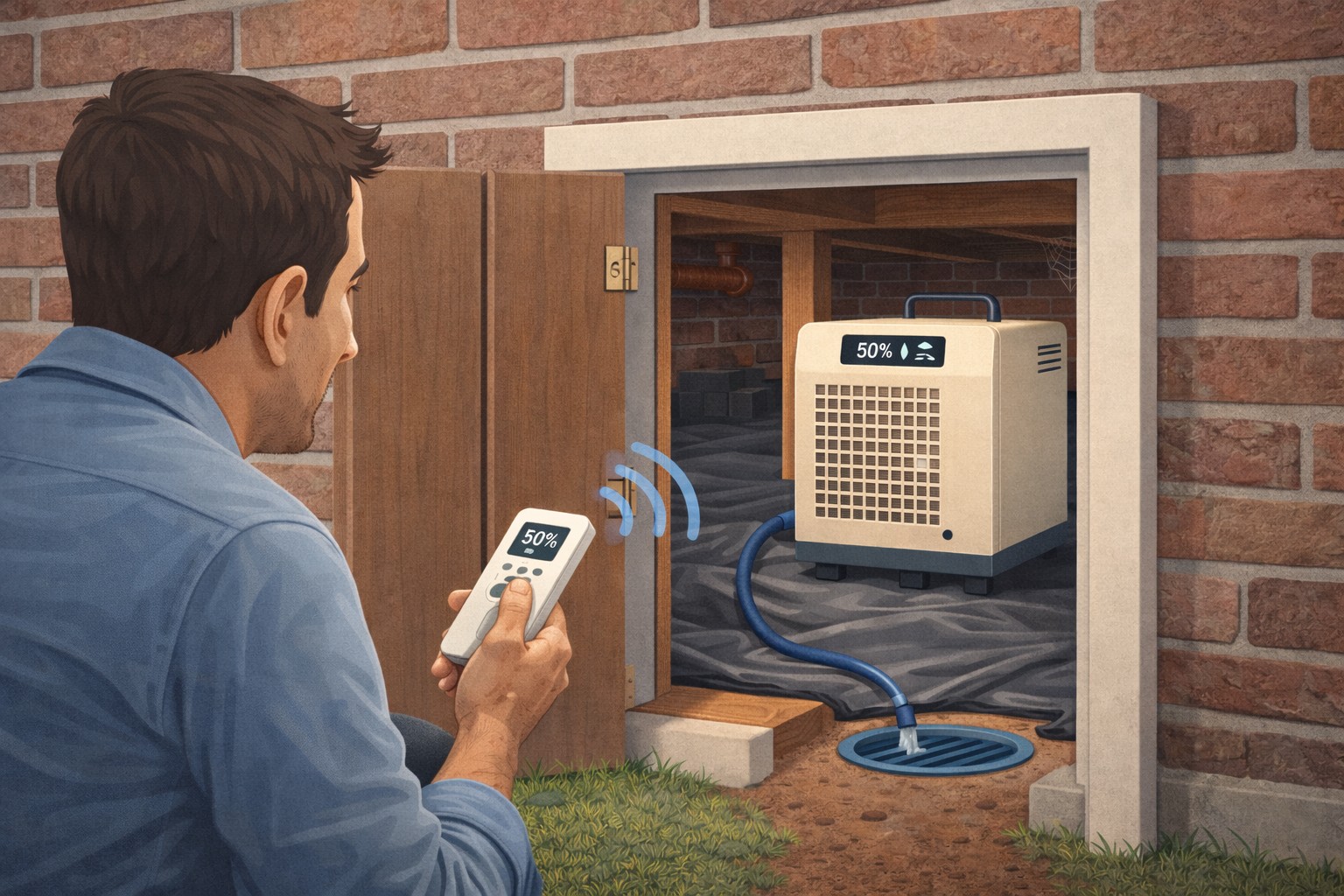
If you have a sump pump in your basement, placing the dehumidifier next to it is ideal. You can hook a drain hose directly into the sump pit with a gravity-fed drain. This allows the unit to empty itself without needing a manual dump. Few things are better than not having to empty your dehumidifier bucket.
Basements with laundry rooms have it even worse. Washing machines and clothes dryers put tremendous moisture into the air with every load. Keep your dehumidifier near the laundry area if you have one. Bonus points if you vent your dryer outside! No dehumidifier can keep up with a dryer that vents into your house.
Main Floor and Living Areas
Your home’s main living area will usually not be as humid as the basement. Kitchens add humidity whenever you cook. crawl spaces under ground floors can also push humidity up through flooring.
Pick a central location on this floor. Hallways or large open living spaces allow the dehumidifier to capture air from several rooms at once. Keep your interior doors open as much as possible to give the dehumidifier’s air more room to roam.
If you have a problem room like a bathroom without an exhaust fan or utility room, place it in that room while you’re using it. You can always move portable dehumidifiers from room to room as needed. Think of it as a tool you bring to the job site, not a decoration you leave in one spot.
Upper Floor and Bedrooms
It’s quite common to neglect the upstairs rooms when dehumidifying your home. Don’t make this mistake! Upper floor bathrooms can produce tons of humidity from showers and baths. Heat builds up near ceilings and poorly insulated attic spaces. This keeps air near bedrooms and hallway ductwork uncomfortably humid as well.
Dehumidifier placement on the upper floor is often the landing of your upstairs staircase. This spot puts it near the center of all bedrooms and close to the bathroom. With your doors open, the dehumidifier can catch moisture from your entire upstairs area.
If your upstairs rooms remain humid even after treating the basement, consider getting a second dehumidifier. Using one downstairs and one upstairs lets you fight humidity on both levels at once. Since humidity has a hard time traveling between floors, one dehumidifier can’t usually handle multi-story homes.
What About the Attic?
Many attics are not finished or maintained at room temperature. Hot air rises, and most portable dehumidifiers can’t operate under extreme heat. Don’t put your dehumidifier in the attic unless you’re sure it can handle the heat and have a climate-controlled space.
If you have a finished attic you keep climate controlled like the rest of your house, treat it like any other room. An attic bedroom needs dehumidifier placement just as close to moisture sources as any other bedroom.
One or Multiple Units?
It’s possible for one big dehumidifier to do the job on one floor. However, it still can’t help you on other floors. Multi-level homes require multiple units for whole-home coverage.
Is the budget tight? Install one dehumidifier in the basement first. Since heat and humidity rise up through your home from bottom-to-top, treating your basement will naturally improve air on the floor above. Work your way up one level at a time until your whole house feels better.
Another solution is to invest in a whole-home dehumidifier. These units connect to your HVAC system and treat air as it travels through your ducts. It’s the easiest way to ensure whole-home coverage. However, they also cost more to buy and have professionals installed.
Tip: Use a Hygrometer to Identify Problem Areas
Purchase a hygrometer and monitor your home’s humidity levels on each floor before taking action. Hygrometers cost next to nothing at your local hardware store. Spend a week monitoring and writing down humidity levels before you make any permanent placement changes.
You may discover your basement is more humid than you thought. Or maybe your upper floor needs more help than the rest. Finding out exactly where your humidity problem is worst will help you place your dehumidifier(s) accordingly.
Proper placement not only saves you money on energy bills. It also protects your home from moisture damage and helps you get better results without buying unnecessary equipment.
Case Study: Using Two Dehumidifiers on Different Floors of the House
Client: Owner of a 3-bedroom, three-story house (basement, main floor, upper level)
Problem: Musty odours coming from basement; condensation appearing on upstairs windows; humidity levels inconsistent in different areas of home. The homeowner was currently using only one portable dehumidifier located in his living room.
Solution:
Moved client’s current dehumidifier to basement near centre of room (allowed enough space around unit).
Placed a second portable dehumidifier on upstairs landing to help capture moisture from upstairs bathrooms and bedrooms.
Used a hygrometer on each level of the home to monitor humidity fluctuations and problem areas.
Left interior doors open to allow air to flow freely between rooms.
Strategically located units near sources of moisture while still allowing space to breathe around the unit. This included near the laundry room in the basement and upstairs bathroom.
Plumbed first dehumidifier (located in basement) to drain hose allowing it to run continuously without a bucket.
Results:
- Humidity went down from 75% to 45% in the basement in 2 days.
- No more condensation on upstairs windows after 3 days.
- Musty smells are eliminated on all levels of the home.
- Enjoying consistent humidity levels (40–50%) throughout the entire home.
Moral of the story: One dehumidifier won’t cut it if you have a multi-level home. Treat humidity room-by-room, or floor-by-floor. Start from the ground up!
Case Study: https://www.livescience.com/will-a-dehumidifier-in-a-basement-help-upstairs
FAQs:
1. On which floor should I place my dehumidifier?
Ideally, you should start on the lowest level of your home (be it basement or main floor). If you continue to experience high humidity, treat the floors above it as well.
2. Will one dehumidifier work for my whole house?
Air does not transfer well between floors or levels. If you have a multi-story home, you will most likely need more than one dehumidifier.
3. Why do I need to start on the basement level?
This is where most humidity enters your home and becomes trapped. By starting here you can ensure humidity will not rise to other areas of your home.
4. Where should I place a dehumidifier on the main level of my home?
Place the dehumidifier in a main hallway or central location where it can treat multiple rooms.
5. Where should I place a dehumidifier on the second floor?
Similar to the main level, place a dehumidifier on top of the staircase or on hallway landing. Bedrooms and bathrooms are usually upstairs humidity “hot spots”.
6. Should I leave doors open or closed when using a dehumidifier?
Leave interior doors open to allow for better air flow and for dehumidifiers to treat as much area as possible.
7. Can I use one dehumidifier upstairs and downstairs?
While it’s not ideal, you can pick up your unit and move between floors. If you find you’re experiencing humidity issues on a consistent basis, it might be time to dedicate a unit to each floor.
8. Should I put my dehumidifier in the attic?
No. Unless you have a “finished” attic with heat and AC, your portable dehumidifier will shut off from the extreme temperatures your attic can reach in summer and winter.
9. How can I tell where the humidity is the worst in my home?
Invest in a hygrometer and monitor the humidity levels on each floor. This will allow you to know where humidity likes to stick around in your home.
10. Should I look into whole-home dehumidifiers?
Yes. Whole-home units hook into your HVAC systems and dehumidify air as it’s circulated through your home. This allows for consistent humidity control from floor to floor.