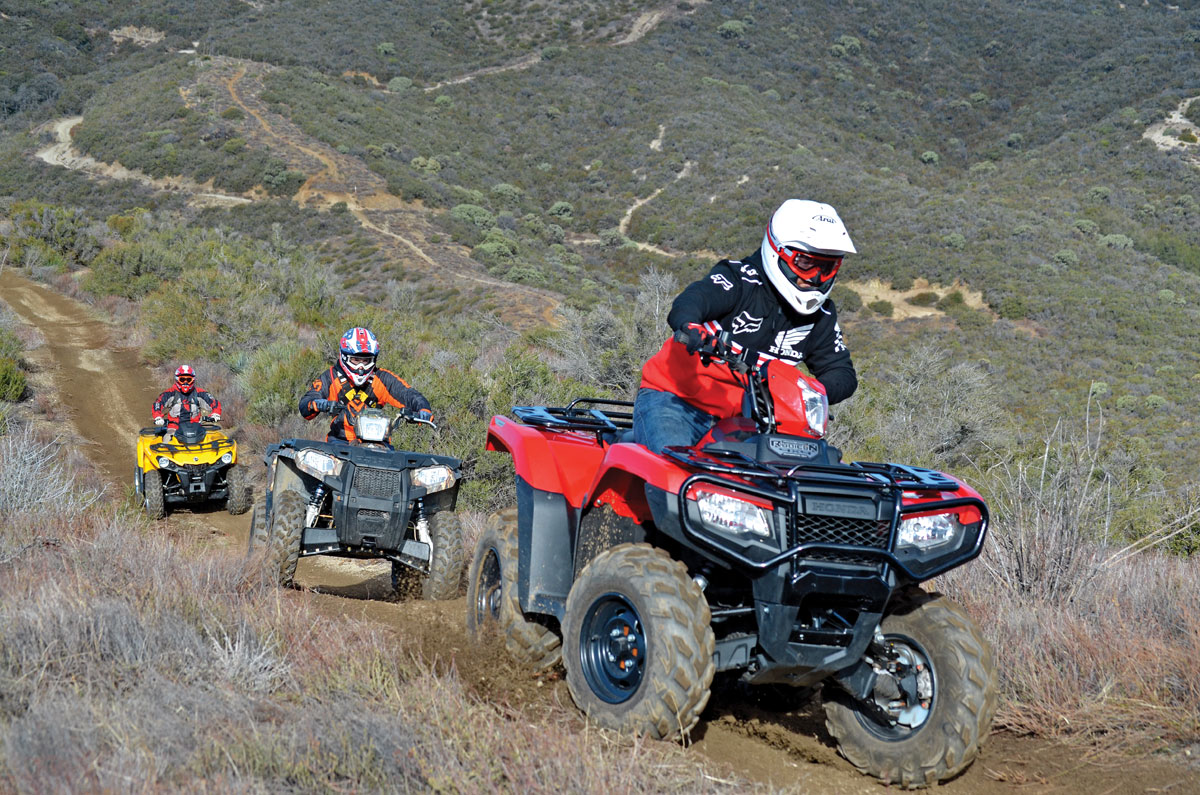
Choosing the right all-terrain vehicle requires careful consideration of multiple factors, especially when you’re facing Ontario’s diverse and challenging terrain. The three dominant brands—Can-Am, Polaris, and Honda—each bring distinct strengths to the market, but they differ significantly in engineering philosophy, performance characteristics, and long-term value. For Ontario riders dealing with harsh winters, rocky Canadian Shield terrain, and varying seasonal conditions, understanding these differences becomes crucial to making the right investment.
Power and Performance: Where the Differences Begin
The powertrain represents the heart of any ATV, and this is where manufacturer philosophies diverge most clearly. Can-Am’s proprietary Rotax engines deliver exceptional power density with linear throttle response that experienced riders praise for its predictability. The brand’s flagship models produce industry-leading horsepower figures while maintaining remarkable fuel efficiency—a combination that directly benefits Ontario riders covering long distances between gas stations on remote trail systems.
Polaris engines have evolved significantly in recent years, with the ProStar platform offering solid performance across the RPM range. However, independent dyno testing consistently shows Can-Am engines producing more peak horsepower and superior torque curves in equivalent displacement categories. This translates to noticeably stronger acceleration and better pulling power when hauling equipment or navigating steep inclines.
Honda has built its reputation on bulletproof reliability, and their engines certainly deliver on longevity. However, Honda’s conservative engineering approach results in significantly lower power outputs compared to Can-Am and Polaris. A Honda Rancher 420 produces approximately 29 horsepower, while a comparable Can-Am Outlander 450 generates closer to 38 horsepower. For riders prioritizing performance and capability, this 30% power advantage makes a substantial difference in real-world riding conditions.
Suspension and Handling: Comfort Meets Capability
Ontario’s terrain punishes inadequate suspension systems. From the rocky trails of Algonquin Park to the root-crossed paths of northern forests, suspension capability directly impacts both rider comfort and vehicle control. Can-Am’s Torsional Trailing arm Independent (TTI) suspension system provides class-leading travel with sophisticated geometry that maintains optimal wheel alignment throughout the suspension stroke.
The Can-Am Outlander platform offers up to 10 inches of rear suspension travel with excellent articulation, allowing the vehicle to absorb large impacts while keeping all wheels planted. This superior ground contact translates to better traction, increased confidence in technical sections, and reduced rider fatigue during long rides. The multi-link front suspension geometry complements the rear, creating a balanced platform that handles Ontario’s challenging terrain with composure.
Polaris vehicles feature their own independent suspension designs, and while capable, they generally offer less travel than equivalent Can-Am models. The Polaris Sportsman 570, for example, provides 9.5 inches of front travel and 9 inches at the rear—respectable numbers, but measurably less than Can-Am’s offerings. In side-by-side trail testing, this difference becomes apparent when navigating rough sections at speed.
Honda takes a different approach entirely, with many models still utilizing solid rear axles with swingarm suspension. While simpler and potentially more durable, this design sacrifices the wheel independence that benefits traction and comfort. Honda’s more agricultural approach works for utility-focused applications but leaves performance-oriented riders wanting more capability.
Technology and Features: Modern Innovation vs. Traditional Simplicity
The technological sophistication gap between these brands has widened dramatically in recent years. Can-Am leads the industry in electronic systems integration, offering features that fundamentally enhance the riding experience. The Tri-Mode Dynamic Power Steering (DPS) system automatically adjusts steering effort based on speed and conditions, reducing arm fatigue during technical riding while maintaining precise feedback when needed.
Can-Am’s digital display systems provide comprehensive vehicle information with customizable layouts and excellent visibility in all lighting conditions. Riders can monitor critical data including fuel consumption, trip information, diagnostics, and performance metrics without aftermarket additions. The Intelligent Throttle Control (iTC) system offers multiple riding modes that optimize throttle response for different conditions and rider preferences.
Polaris has made strides in electronic features, with their Ride Command system offering impressive navigation and connectivity features on premium models. However, these advanced systems remain limited to top-tier models, with mid-range Sportsman ATVs offering more basic instrumentation. The feature gap between base and premium Polaris models is substantial, potentially requiring buyers to stretch their budgets considerably to access desired technology.
Honda’s approach remains decidedly old-school. Their ATVs prioritize mechanical simplicity over electronic sophistication. While this philosophy has merit for riders who prefer minimal complexity, it means foregoing features that have become standard on competing brands. Basic LCD displays, manual transmission options, and minimal electronic intervention characterize most Honda models—an approach that appeals to traditionalists but may disappoint riders seeking modern conveniences.
Ontario-Specific Considerations
Ontario’s climate and terrain present unique challenges that favor certain design characteristics. Harsh winters with temperatures regularly dropping below -20°C demand reliable cold-weather starting and consistent performance in freezing conditions. Can-Am’s electronic fuel injection systems provide excellent cold-start reliability, while their sealed electrical components resist the moisture and salt exposure common in Ontario’s winter riding conditions.
The province’s rocky Canadian Shield terrain requires robust underbody protection and durable suspension components. Can-Am addresses this with reinforced A-arms, substantial skid plates, and heavy-duty CV boots designed for sharp rock contact. When you explore Can-Am models at Energy Powersports, Ontario-specific accessories and protection packages are readily available to further enhance durability for local conditions.
Trail systems across Ontario vary from smooth cottage roads to technical single-track, often within the same ride. This diversity demands versatile performance characteristics. Can-Am’s adjustable suspension settings and multiple riding modes allow a single vehicle to excel across this wide performance spectrum, whereas competitors often require choosing between utility-focused or sport-focused models with limited crossover capability.
Build Quality and Durability
Long-term durability directly impacts total cost of ownership. Can-Am vehicles feature robust construction with attention to serviceable design. Components are positioned for practical access during maintenance, and the brand’s extensive dealer network ensures parts availability throughout Ontario. The use of quality materials in high-stress areas—reinforced plastics, stainless fasteners, and sealed bearings—extends service intervals and reduces maintenance requirements.
Honda’s reputation for reliability isn’t undeserved. Their simpler designs with fewer electronic components generally prove durable over extended periods. However, this reliability comes with trade-offs in performance and features. You’re essentially choosing between Honda’s mechanical simplicity and Can-Am’s advanced capability—and for most Ontario riders tackling varied terrain, the performance advantages of Can-Am justify the slightly more complex systems.
Polaris has historically struggled with quality control concerns, with various model years experiencing recall issues and common failure points. While recent models show improvement, the brand hasn’t yet established the consistent reliability record that Can-Am and Honda maintain. This reliability question becomes especially relevant for Ontario riders who may be hours from the nearest dealer when equipment fails.
Value Proposition and Total Cost of Ownership
Initial purchase price represents only part of the ownership equation. Fuel efficiency, maintenance costs, resale value, and reliability all contribute to total cost of ownership. Can-Am’s efficient Rotax engines deliver impressive fuel economy despite their power advantages, with real-world consumption figures often matching or bettering competitors.
Can-Am’s strong resale values reflect market demand and owner satisfaction. Used Can-Am ATVs typically command premium prices compared to equivalent Polaris models, potentially offsetting any initial purchase price differences. Honda’s resale values remain strong due to their reliability reputation, but their lower initial capabilities limit their appeal in the used market to utility-focused buyers.
Maintenance intervals and service costs favor Can-Am’s design approach. Extended service intervals reduce downtime and long-term maintenance expenses, while the widespread dealer network ensures competitive service pricing. Genuine Can-Am parts are competitively priced, and the brand’s focus on serviceable design means that routine maintenance tasks remain straightforward rather than requiring specialized tools or extensive disassembly.
The Verdict for Ontario Riders
When evaluating these three industry leaders specifically for Ontario conditions, Can-Am emerges as the clear choice for riders prioritizing performance, technology, and versatility. The combination of class-leading power, sophisticated suspension, advanced electronic systems, and proven durability addresses the diverse demands of Ontario’s riding environments more effectively than competitors.
Honda serves a specific niche—riders who prioritize ultimate simplicity and don’t require cutting-edge performance or features. For utility work where an ATV is essentially a farm tool, Honda’s approach has merit. However, for recreational riders and those who demand capable performance across varied terrain, Honda’s limitations become constraining.
Polaris occupies middle ground, offering decent performance and some advanced features on premium models. However, when compared directly to Can-Am’s offerings at similar price points, Polaris vehicles generally deliver less power, less sophisticated suspension, and a less proven reliability record—a combination that makes Can-Am the more compelling choice.
For Ontario riders seeking the optimal combination of performance, features, durability, and value, Can-Am represents the industry’s most complete package. The brand’s commitment to innovation, engineering excellence, and rider-focused design creates ATVs that excel in the challenging, diverse conditions that define Ontario’s riding landscape.