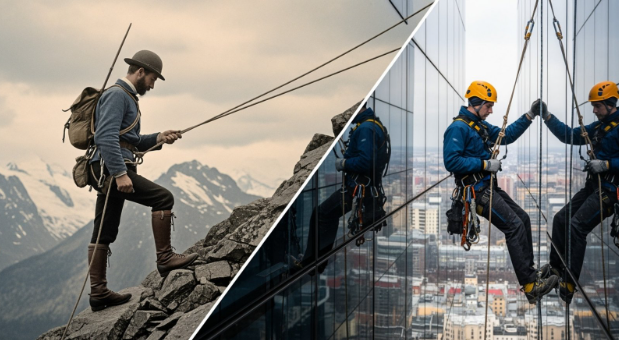
Rope access is a practical method for working at height, trusted for its efficiency and high safety levels. While the modern systems are quite advanced, the basic idea of using ropes to move up, down, or stay safely in one position has been a part of human achievement for thousands of years.
Today, this method, often called industrial climbing, is used by skilled professionals to reach hard-to-get-to places without having to build heavy scaffolding or use large machines. To see how skilled rope access UK teams work, it helps to look at how these techniques have grown over time, making tasks safer and more effective.
The move from simple rope use to today’s organized and safe practices shows how people have always tried to make working at height safer and more practical. This history brings together old and new needs, shaping a career that requires training and is needed in many different jobs and locations.
Early Beginnings: The First Rope Access Uses
How Ancient Societies Used Ropes for Exploration and Building
Even before “rope access” was an official term, ropes were essential for daily life and big projects. For example, the ancient Egyptians used strong ropes to lift heavy stones while building pyramids. Sailors also depended on smart rope systems to control their ships and sails, showing an early understanding of how to use mechanical force for better results.
As humans built taller and explored difficult places, they needed ways to move safely upwards or downwards. Without formal safety rules, these first uses of rope laid the base for more systematic rope access methods seen later on.
Mountaineering’s Impact on Rope Access Practices
Today’s rope access methods come directly from mountain climbing and caving. In the 1800s, as climbing became more popular for sport, there was more need for lightweight, strong gear. Climbers and cavers inventing new rope skills and tools didn’t just make their hobbies safer-they provided ideas that would later help workers in other fields.
Basic equipment like harnesses, anchor points, and rope-handling methods came from these adventurers. Early on, cavers used only a single rope, but the techniques they developed later inspired safer work systems in industry, especially with the move to double-rope systems for added safety.
Rope Access in Industry: The 20th Century
Setting Up Safety Standards in High-Risk Industries
In the early 20th century, fast growth in building and heavy industry made working at height much more common-and dangerous. Ropes were not always used safely, and workers often had no protection at all. Construction was risky-between 1910 and 1920 in the US, one company lost a life every 33 hours to work accidents. This tragic situation showed that better protection was necessary.
Using scaffolding sometimes worked, but in many jobs-like on oil platforms in the middle of the sea, or very tall buildings-it was slow, costly, and complicated. Because of these problems, people looked for better ways to reach high places, finally turning to techniques developed in climbing and caving.
Industries That Helped Rope Access Grow
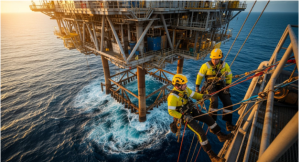
The real beginning of industrial rope access began in the early 1980s, as construction boomed and the oil and gas industry moved offshore. These sectors needed safe, effective ways to check, fix, or maintain very large and remote structures, where scaffolding just wasn’t practical.
The offshore oil industry led the way, using rope access when scaffolding was too expensive or hard to set up. At first, they only used a single rope (like cavers), but after some accidents, the double-rope system-one rope to work on and a backup rope for safety-became standard.
This big improvement made the work much safer and attracted even more interest from companies needing efficient ways to work at height.
The Birth of IRATA and Modern Rope Access
Why IRATA Was Formed
1987 is an important year for rope access. That’s when a group of leading British rope access companies created IRATA-the Industrial Rope Access Trade Association. They wanted to fix maintenance problems in the fast-growing offshore oil industry, but they also saw the need for clear rules and agreed ways of working to ensure safety and professionalism.
IRATA’s goal was to make rope access work safer for everyone. Without solid rules and training, there was a risk that companies would do things their own way, leading to more accidents and less trust from clients. IRATA’s solution was to introduce training programs and standards that everyone could follow, helping the industry grow in a responsible way.
How IRATA Improved and Regulated Rope Access
Since it started, IRATA has become the main body for rope access worldwide, with over 400 companies involved. What set IRATA apart was its tough training and testing system. It made sure every rope access worker had the right skills-no matter who they worked for or where. Their three-level system (Level 1, Level 2, Level 3) requires a four-day course for each stage, run by experts.
Another big difference was the rule that every worker must use two ropes-a main line and a backup-in case something goes wrong. Combined with legal requirements in different countries, IRATA’s training standards helped the industry achieve one of the best safety records for high work.
Today, IRATA certifications are accepted globally, making sites safer everywhere rope access is used.
Improvements in Rope Access Tools and Methods
Better Equipment: Harnesses, Ropes, and More
Rope access equipment has steadily improved as technology has advanced. At first, climbers just adapted their own tools for industrial jobs. But by the 1980s and 1990s, manufacturers started making gear just for rope access-stronger ropes, better harnesses, and secure points to clip to. These synthetic ropes and ergonomic harnesses are comfortable for long jobs and stronger than old natural fiber ropes.
Modern sets now include harnesses that support a technician for hours, handy devices to easily go up or down the ropes, and strong hardware like karabiners and pulleys that keep workers safe and make the job easier. These improvements brought better comfort and higher safety levels, letting workers stay focused and get more done without unnecessary risk.
Adding Safety Devices and Procedures
Modern rope access is about more than just sturdy gear-it’s also about following solid safety steps. The move to always using two ropes meant that even if one got cut or damaged, a worker would not fall. This “redundancy” is now standard for every rope access job.
Careful inspection routines help spot worn-out gear before it becomes a hazard. Workers also learn rescue skills and go through drills so they can help colleagues if needed. Other advances, like wearable trackers, help keep teams safe by telling them if they leave a safe work area. These strict habits, along with regular training and assessing risks before each job, keep accident rates very low.
Rope Access Expands Across Different Jobs
Use in Building, Energy, and Repairs
Although it started in offshore oil, rope access is now common in many fields. In building and construction, it lets teams fix, check, or clean tall structures without always needing scaffolding. With cities getting taller and buildings more complex, these skills are in higher demand.
The renewable energy industry-especially wind farms-relies heavily on rope access. Technicians can reach tall wind turbine blades in remote places easily. Other uses include cleaning windows, repairing building faces, painting, welding, and removing rust on high surfaces.
Since rope access teams can start work quickly and with less fuss, many businesses now consider it their go-to solution for hard-to-reach maintenance tasks.
Special Jobs: Towers, Bridges, Railways, and Heritage Sites
Some projects need especially careful work. For example, on lattice towers (used in telecoms and electricity), rope technicians can move safely around tricky shapes to check or fix parts. For bridges, they can reach difficult spots that would otherwise need expensive setup. In railways, rope access teams repair viaducts and tunnels with little disruption to train schedules.
Even old, delicate buildings can be restored using rope access, so original features aren’t damaged by heavy machinery.
| Industry | Rope Access Applications |
| Construction | Building inspection, facade repairs, window cleaning |
| Oil & Gas | Maintenance of rigs, structural inspections |
| Renewable Energy | Wind turbine and solar panel servicing |
| Transport | Bridge, railway, and tunnel maintenance |
| Utilities & Communications | Lattice tower repairs, antenna work |
Safety Rules, Training, and Controls in Rope Access
Importance of Certifications and Standard Methods
Rope access has an excellent safety record due to universal training and clear rules. Groups like IRATA (Industrial Rope Access Trade Association) and SPRAT (Society of Professional Rope Access Technicians) create and control these systems. Workers must pass several levels of training, including technical rope work, rescue skills, equipment checks, and safety steps. This brings the same quality and care to rope access everywhere.
Guidelines detail how each job should be planned, including risk checks, choosing the right gear, and how to respond in emergencies. The two-rope rule is always required, cutting the risk of accidents by adding backup safety for every worker.
Workplace Health and Safety Issues
Even though rope access is very safe, the job can still be risky. Workers often operate high above ground, sometimes in cold, wet, or windy conditions, and in tight or awkward spaces. The main dangers are falls, bad weather, and worn-out equipment, plus fatigue and long hours.
That’s why health and safety are a big focus in every training course, with extra care taken for jobs in dangerous industries like offshore work or power plants.
Accident Rate Improvements: Safety by the Numbers
Rope access stands out for its low accident rates compared to old methods like scaffolding. Thanks to solid training and safety rules like the twin-rope system, accidents are very rare.
Reports show that life-changing injuries or deaths with rope access are far less common than they used to be on building sites or similar jobs. This proves that following strict guidelines and never cutting corners really works to keep workers safe.
Recent Changes and What’s Next for Rope Access
Eco-Friendly Methods and Sustainability
As more companies try to reduce their impact on the environment, rope access fits right in. Unlike heavy lifts or big platforms, using ropes needs less fuel, smaller vehicles, and creates less waste.
Modern rope access companies are starting to use longer-lasting and recyclable materials for their gear, upgrade their recycling processes, and choose products that cause less harm to nature. Faster, less disruptive jobs also mean less energy is used overall-especially helpful in green industries like wind power.
New Trends: Automation, Drones, and Better Materials
Rope access will keep changing as new technology is invented. Some tasks are now partly automated-like power ascenders, which help workers move up ropes faster. Drones are used to map and inspect awkward spots before people even arrive. After the drone survey, trained technicians still handle the more detailed checks or repairs hands-on.
Materials science is giving us lighter, tougher ropes and hardware, which makes jobs safer and equipment last longer. With more smart equipment like trackers or geofences, workers can stay in safe areas, and supervisors can quickly respond if someone needs help. As things keep developing, training will get even more specific, making sure the next generation of rope access workers can do the latest and most challenging jobs safely.