Flowers have played a vital role in human expression for centuries, from grand weddings to simple gifts. Floral design is a universal art that appeals to anyone passionate about nature’s beauty. This article explores the essentials of floral design, providing insights and guidance for both enthusiasts and event planners.
Bringing Art to Life with Flowers
Floral design, at its core, combines creativity with nature’s bounty. It’s an art form that uses color, texture, and shape to evoke emotions and create stunning visual displays. For many, arranging flowers is more than just putting blooms together—it’s about crafting a moment, a message, or a memory.
Imagine walking into a room filled with a carefully curated selection of flowers that not only complement the event but enhance the atmosphere, turning it into an unforgettable experience. This is where the magic of floral design truly shines. With the right skills and knowledge, you can transform any occasion into something extraordinary.
In this guide, we aim to equip you with the foundational tools of floral design. Whether you’re an event planner looking to add a personal touch to your events or a floral enthusiast eager to explore new creative avenues, join us as we unravel the endless possibilities of floral artistry.
The Basics of Floral Design
Every great floral arrangement starts with understanding the principles of design. These include balance, proportion, and harmony. Balance ensures that the flower displays don’t topple over and appear visually stable. Proportion involves keeping elements within a scale that feels right, while harmony blends all elements into a cohesive whole. Mastering these basics is essential to producing flower displays that are both beautiful and structurally sound.
Color theory is another crucial aspect of floral design. Different colors convey different emotions and can transform the mood of an arrangement. Warm colors like red, orange, and yellow can evoke excitement and warmth, while cool colors such as blue, green, and purple often bring a sense of calm and relaxation. Understanding how to mix and match colors effectively is key to creating visually appealing arrangements.
Selecting the right flowers involves considering their form, texture, and fragrance. Each flower has a unique character, and combining them requires careful thought to ensure they complement one another. The choice of flowers can make or break an arrangement, so it’s important to choose wisely based on the occasion, season, and your personal style.
Essential Tools for Floral Design
Just as a painter needs brushes and paint, a floral designer requires a set of specific tools to bring their creations to life. These tools help in preparing, arranging, and maintaining flowers.
Scissors or shears are perhaps the most important tools, used for cutting stems to the desired length. Invest in a good pair that is sharp and comfortable to handle, as dull blades can damage flowers and make arranging more difficult. Floral foam and tape are also essential, helping to secure flowers in place and maintain their arrangement.
Other useful tools include wire cutters, flower food, and a sturdy vase or container. Wire cutters are needed for trimming thick stems and wires, flower food helps extend the lifespan of your arrangements, and a well-chosen container serves as the foundation of your design. Having these tools on hand ensures you’re prepared to tackle any floral challenge that comes your way.
Creating Beautiful Flower Displays
Now that you have your tools and a basic understanding of floral design, let’s explore how to create three different styles of arrangements. These styles are popular choices for both personal and professional settings.
Hand-Tied Bouquets
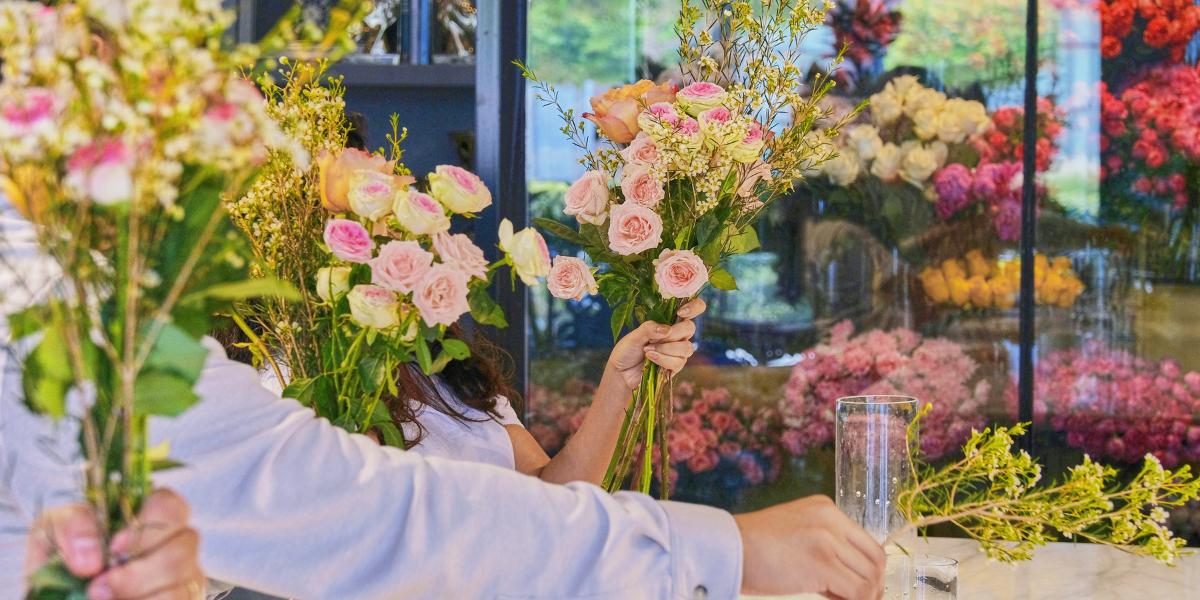
Hand-tied bouquets are a classic choice, perfect for gifts or personal enjoyment. Start by selecting a variety of flowers and greenery that complement each other. Hold the stems in one hand and arrange them by adding one flower at a time, rotating the bouquet as you go. This method ensures an even distribution of flowers and a balanced look. Tie the stems securely with twine or ribbon, and trim the ends to the desired length.
Centerpieces
Centerpieces are designed to draw attention and serve as focal points for tables. Begin by choosing a container that suits the event theme. Use floral foam to anchor the stems and start arranging the larger flowers first, filling in gaps with smaller blooms and greenery. Ensure the arrangement is viewable from all angles and adjust as necessary to achieve symmetry and fullness.
Wearable Floral Art
Wearable floral art includes items like corsages and floral crowns. These pieces require more intricate work but are incredibly rewarding. Select small, sturdy flowers that can withstand handling. Use floral wire and tape to attach the flowers to a base, ensuring the design is lightweight and comfortable to wear. Experiment with placements and styles to create unique pieces of art that can be worn.
Crafting with Seasonal Blooms
One of the joys of floral design is working with seasonal flowers. Each season offers a fresh palette of blooms that reflect the time of year. In spring, you might find tulips and daffodils abundant, while summer brings sunflowers and lilies. Fall is perfect for incorporating rich hues with chrysanthemums, and winter showcases the elegance of poinsettias and holly.
Using seasonal flowers not only enhances the beauty of your arrangements but also supports local growers and reduces environmental impact. Seasonal flowers are often fresher, more affordable, and in peak condition, making them ideal for any floral project.
Sustainable Floral Design Practices
In today’s world, sustainability is more important than ever. Floral design can be eco-friendly by using practices that minimize waste and environmental impact. Consider using locally grown or organic flowers to reduce carbon footprint. Reuse vases and containers, and compost plant waste whenever possible to contribute positively to the environment.
Another sustainable practice is incorporating dried flowers and foliage into arrangements. These materials can be reused and often last longer than fresh flowers, providing long-lasting beauty without the need for constant replacement.
Turning Passion into a Profession
For those captivated by floral design, turning this passion into a career or hobby can be incredibly fulfilling. The floral industry offers a wide range of opportunities, from working in florist shops and creating wedding arrangements to teaching others and starting your own business.
To succeed in this field, continue learning and experimenting with new techniques. Attend workshops and connect with other floral designers to build your network and gain inspiration. Remember, every creation is an opportunity to express your unique style and connect with others through the beauty of flowers.
Conclusion
Now that you’ve learned the fundamentals of floral design, it’s time to put your knowledge into practice. Remember to consider color theory, form and texture, and fragrance when selecting flowers. Have your essential tools ready, experiment with different styles and seasonal blooms, and embrace sustainable practices to create beautiful arrangements that reflect your personal style.